






Top Forts to Visit in Savannah for History Lovers
Why Are Savannah Forts Important to History?
Savannah’s spot on the Georgia coast made it a prime target for both trade and defense throughout American history. The rivers and marshes near the city opened paths to the Atlantic, so leaders built strongholds to guard against attack. Today, visitors can still walk through these places and see how they influenced battles, settlement and the city’s growth. Each Savannah fort has its own story, stretching from the earliest colonial defenses to the Civil War. Exploring several Savannah forts on one trip shows how soldiers lived, how armies adapted to new technology and why Savannah held such an important place in the South’s history.
-
 Admissions
 -
 Shopping
 -
 Dining
 -
 Entertainment
What Makes Fort Pulaski National Monument Unique?
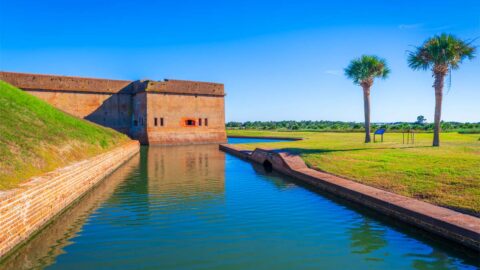
Fort Pulaski National Monument is one of the most remarkable Savannah forts still standing. Built in the 1830s with walls more than 7 feet thick, it was thought to be invincible. In 1862, Union troops aimed rifled cannons at its walls and broke through in less than two days. That moment stunned military leaders and showed the end of old brick defenses.
Walking through the fort today feels like stepping back into a scene that changed history. You’ll see long tunnels, heavy iron drawbridges and bombproof rooms where troops once sheltered during bombardments. Exhibits inside explain how artillery worked and display weapons and gear recovered from the site. Park rangers share stories about the battle and often hold talks that bring the siege to life. Visitors may also catch live cannon demonstrations that echo across Cockspur Island. Outside the fort, trails wind through marshland with views of Tybee Island and the surrounding waterways. This mix of preserved architecture and natural scenery makes Fort Pulaski one of the most memorable Savannah forts, known both for its role in the Civil War and for the experience it gives travelers today.
Why Visit Old Fort Jackson?
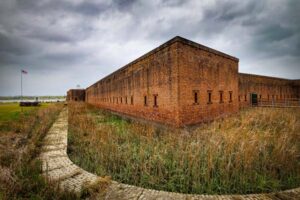 Old Fort Jackson is the oldest standing Savannah brick fort and one of the few that still shows how America built its coastal defenses in the early 1800s. Construction started in 1808, and by the War of 1812 it was already guarding the Savannah River. The fort stayed active during the Civil War, when Confederate soldiers fired its heavy guns to keep Union ships from sailing upriver. Its position made it a centerpiece of Savannah’s defenses and a key reason the city held out as long as it did.
Visitors can climb the ramparts, walk through the barracks and look over exhibits that explain how troops lived and trained inside the fort. Daily cannon firings bring the past to life, filling the air with smoke and thunder that carries across the water. Guides and reenactors share stories about military drills, patrols along the river, and ships like the CSS Georgia that counted on this Savannah fort for protection. The setting makes it easy to imagine the soldiers who once stood guard, and it remains a place where history feels close.
What Makes Fort McAllister State Park Special?
Fort McAllister is one of the best-preserved Savannah earthwork forts from the Civil War. Built from packed earth instead of brick, its walls absorbed cannon fire and held strong through seven major Union naval attacks. In December 1864, Sherman’s troops captured the fort during the March to the Sea, which opened the path to Savannah and forced the city to surrender soon after. The fall of McAllister was a major moment in the campaign and helped seal the Union’s control of Georgia’s coast.
Today, the fort is part of a state park where history and nature meet. You can step inside bombproof bunkers, stand beside hot shot furnaces and see barracks dug into the earthworks. A museum on-site shows uniforms, weapons and personal belongings uncovered in excavations while a short film explains how the fort fit into Sherman’s campaign. Visitors often spend extra time on the trails that cut through the salt marsh or along the Ogeechee River, where fishing and camping are popular. Fort McAllister is a Savannah fort that still shows the strength of Confederate defenses while giving travelers a chance to enjoy the quiet beauty of coastal Georgia.
What Can You See at Wormsloe Historic Site?
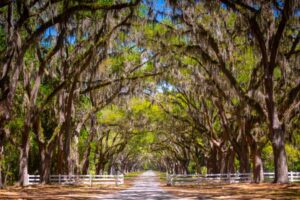 Wormsloe Historic Site offers a different look at Savannah’s defenses. In 1739, Noble Jones, one of Georgia’s first settlers, built fortified tabby concrete walls to guard the Skidaway Narrows. These ruins are the oldest surviving colonial fortifications in the area and show how early colonists prepared to defend the city long before larger Savannah forts like Pulaski or Jackson were built.
The property is best known for its mile-long avenue of live oaks, a view that has become one of the most photographed scenes in Georgia. Trails lead to the tabby ruins, and the small museum explains Noble Jones’ story and the colony’s early years. Costumed interpreters bring history to life with demonstrations of daily activities, from farming to defense drills. Wormsloe stands apart from other Savannah forts because it combines natural scenery with the story of survival in the earliest days of the colony.
What Tips Help When Exploring Savannah Forts?
Planning is the key to seeing more than one Savannah fort in a single day. Public transit doesn’t serve these locations well, so a car or ride-share is the most reliable way to reach them. Starting early helps maximize time, especially if you want to see Fort Pulaski, Old Fort Jackson and Fort McAllister in one trip.
Check event schedules in advance so you don’t miss cannon firings or living-history programs, which add an extra layer to the visit. Wear sturdy shoes, since each Savannah fort requires walking over uneven paths, trails and earthworks. Packing water and light snacks is useful, particularly in warmer months when tours can take longer than expected. It’s also a good idea to bring a camera or binoculars, since many of the forts overlook rivers and marshes where you can spot wildlife and scenic views along with historic ruins. These small steps make it easier to enjoy the history and atmosphere of Savannah’s historic sites.
Why Plan a Visit to Savannah Forts?
Exploring Savannah forts gives visitors a chance to connect with the city’s role in shaping American history. Each site, from the colonial ruins at Wormsloe to the massive walls of Fort Pulaski, adds a piece to the story. Walking across these grounds helps you picture the soldiers who once defended Savannah and the events that unfolded here. To make the day easier, Old Town Trolley Tours® is one of the best ways to connect historic sites with the rest of the city. The trolleys feature friendly and knowledgeable guides, live narration and hop-on, hop-off service that lets you explore at your own pace. Guests also enjoy not having to worry about parking or navigating unfamiliar streets. Along the way, you’ll hear stories that bring the city’s past to life, making every stop more meaningful. A trip that includes a Savannah fort or two is one of the most rewarding ways to experience the Hostess City of the South.
FAQs
What are the must-visit forts in Savannah?
Travelers interested in military history should prioritize Fort Pulaski National Monument, Old Fort Jackson and Fort McAllister State Park. Each Savannah fort highlights a different stage of the city’s defenses, but they also help visitors understand how people lived within their walls. Pulaski’s preserved structures show how masonry was tested during the Civil War, Jackson brings history to life with scheduled programs and McAllister illustrates the role of earthworks in Confederate planning. Wormsloe Historic Site is also worth adding, since its colonial tabby ruins and museum exhibits offer an early view of Savannah’s efforts to defend the coast. Visiting a mix of these Savannah forts creates a fuller picture of how the city adapted to challenges across centuries.
How much time should I plan to spend at each fort?
The amount of time depends on how much you’d like to experience. Fort Pulaski is large and often takes two to three hours if you include a ranger talk, a loop around the moat, and the walking trails. Old Fort Jackson can be seen in about an hour, though many guests plan their visit to catch the cannon firings and reenactments. Fort McAllister, with its museum and extensive earthworks, usually requires a half-day if you want to see everything. Wormsloe Historic Site can be explored in one to two hours, though families often extend their visit by walking the shaded trails and taking photos under the mile-long oak avenue. Seeing two Savannah forts in a day is possible, but planning around event schedules makes the experience more rewarding. Many travelers also recommend bringing a picnic or snacks, since several forts have scenic spots that make a perfect break between tours.
Can I reach the forts using public transportation?
Public transit in Savannah doesn’t reach the forts directly, so visitors should plan to drive or arrange a ride-share. Parking is available and free at Fort Pulaski, Old Fort Jackson, Fort McAllister and Wormsloe. Ride-share apps make drop-offs convenient and are often used by travelers without a rental car. Many visitors enjoy combining a day at a Savannah fort with a city tour before or after, which helps balance local history with downtown attractions. Event calendars are easy to check online, so driving or ride-sharing ensures you’ll have the flexibility to arrive in time for cannon firings or guided programs. Renting a bike isn’t practical for reaching the forts, but cycling inside the parks themselves is sometimes allowed, which adds another layer to the visit.
Are the Savannah forts family-friendly?
Families often enjoy visiting a Savannah fort because the open grounds encourage kids to explore while learning about history. At Fort Pulaski, the wide moat and grassy areas make the site a good place for children to walk and run safely. Old Fort Jackson’s cannon firings are loud and exciting, keeping younger visitors engaged. Fort McAllister offers both history and recreation, with picnic areas, playgrounds and campsites that turn the visit into more than just a tour. Wormsloe is especially popular for family photos under the oak avenue and for its interpreters, who share stories of colonial life in a way children can understand. Bringing snacks, water and comfortable shoes makes a day at any Savannah fort more enjoyable for parents and kids alike. Families who stay longer sometimes join seasonal events or festivals hosted on the grounds, adding even more variety to the experience.
What is the best time of year to visit Savannah forts?
Spring is a favorite season to explore Savannah forts, since the weather is mild and special events are common. Summer brings longer days, which allow more time at each site, though sunscreen and water are essential in the heat. Fall is known for its cooler air and seasonal festivals, many of which pair well with a fort visit. Winter is quiet, offering fewer crowds and a slower pace that makes it easier to take your time inside the ruins or along the trails. Checking schedules for reenactments or living-history events helps ensure your visit to a Savannah fort is as engaging as possible, no matter the season. Those who plan carefully often combine their visit with other historic tours in Savannah, making each season feel like a new chance to connect with the city’s past.