

Savannah Haunted Facts
What Makes Savannah So Spooky?
Many haunted Savannah facts come from the city’s long and complicated past. Founded in 1733, Savannah has seen wars, fires, and epidemics that left deep marks on the people who lived here. Those moments, along with stories passed down through families, help explain why people still say the past never really left.
Additionally, during the yellow fever outbreaks of the 1800s, thousands were buried in unmarked graves now covered by parks and sidewalks. The Siege of Savannah during the American Revolution brought heavy losses, and many soldiers were never moved from where they fell. Later, fires destroyed blocks of homes and businesses, reshaping the city again and again. Walking through the historic district at night, the quiet feels thick, like Savannah remembers everything that’s ever happened here.
What Are the Most Haunted Hotels and Houses in Savannah?
Savannah’s historic homes and inns hold some of the most famous haunted Savannah facts. One of the city’s best-known haunted residences is the Mercer Williams House on Bull Street. Built in the 1860s, it has long been connected to mysterious deaths and chilling tales that continue to draw curiosity. The house gained added attention after being featured in Midnight in the Garden of Good and Evil, and visitors still report feeling uneasy when passing its iron gates. Tours of the property focus on its architecture and notable history while carefully touching on the legends that made it infamous.
The Marshall House Hotel on East Broughton Street has an equally eerie past. It served as a hospital during the Civil War, and guests often describe the sound of footsteps or the quiet squeak of cart wheels moving down the hall. Others mention hearing soft voices that vanish before they can be placed. The creaking floors and old photographs make it easy to picture the building in its earlier days, filled with doctors and patients instead of travelers.
At 5 West Jones Street, the Eliza Thompson House feels calm by day but has a few stories of its own. Guests say they’ve seen a little girl in a white dress near the stairs or shadows crossing the upstairs windows. Even longtime staff admit some rooms have a strange stillness to them. Still, it remains one of Savannah’s most inviting places to stay, even for those who might keep one eye open at night.
 The history of the Hamilton-Turner Inn on Abercorn Street also makes nearly every list of haunted Savannah facts. Late at night, guests sometimes mention the quiet roll of billiard balls, light footsteps, or the creak of furniture when no one’s nearby. The inn’s mix of elegance and ghostly reputation makes it both beautiful and unsettling, depending on who’s telling the story.
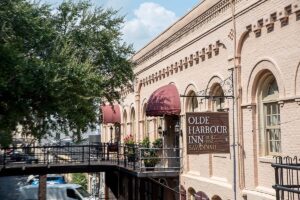
Down by the river, the Olde Harbour Inn has a gentler legend. Guests talk about a ghost named Hank who likes to play small tricks like moving objects, turning on lights, or leaving the smell of burning oil behind. Staff members say Hank seems more playful than spooky, and many guests leave with a story that feels more funny than frightening.
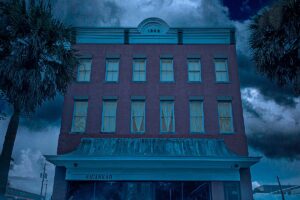 Just a few blocks away sits one of the most mysterious addresses in Savannah, 416 West Liberty Street, home to the Ghost Hunters of Savannah® Paranormal Investigation. The site has a long and uneasy history tied to Revolutionary War battles and years when the neighborhood had a rough reputation. Guests join experienced investigators here for a guided ghost hunt using real equipment. Before the search begins, the team explains how to use the tools and shares a few tricks for catching strange sounds or movements. After the night ends, people often talk through what they found and what might not have an easy answer. Some leave convinced. Others leave curious.
What Haunted Cemeteries and Grave Sites Are in Savannah?
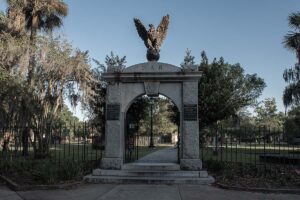 Savannah’s cemeteries hold some of the oldest haunted Savannah facts, and each one tells part of the city’s long and sometimes eerie story. Colonial Park Cemetery at 200 Abercorn Street is one of the best-known. More than 10,000 people were buried there, many in unmarked graves resting just beneath the grass. Visitors talk about hearing faint whispers near the oldest headstones or catching a flash of movement that disappears when they turn. The quiet paths, hanging moss, and worn stones give the place a feeling that stays with you.
Bonaventure Cemetery on Bonaventure Road appears in almost every tale about haunted Savannah facts. The statue of Little Gracie Watson, carved after her death in the 1880s, still draws visitors from all over. Some people say her eyes seem to follow them, while others notice small changes in her face in different photos. Local guides tell stories of angel statues that appear to shift between visits and the sound of dogs barking when no one is nearby. Bonaventure’s mix of beauty, history, and rumor makes it one of Savannah’s most memorable places.
Laurel Grove Cemetery has a quieter reputation but carries a strong sense of mystery. The trees grow thick, shutting out most of the sunlight and muffling sound. Visitors mention small lights near the graves or voices fading into silence. Locals often avoid walking there alone at night, saying the air feels heavy and close.
Which Streets and Districts in Savannah Hold the Most Haunted Stories?
Many haunted Savannah facts come from the city’s streets and riverfront, where the past feels especially close. River Street, with its old brick warehouses and uneven cobblestones, has seen centuries of trade and tragedy. The buildings once held cotton and molasses, but also carry stories of those who suffered in silence. Visitors walking the waterfront sometimes report the sound of chains rattling or voices drifting through the fog that rolls in from the river.
On Abercorn Street, the house at 432 is one of Savannah’s most talked-about addresses. People often mention flickering lights in the windows or sudden cold spots that seem to follow them. Locals say the house has an uneasy energy that lingers even after you walk away, and its long history of sorrow only adds to its reputation.
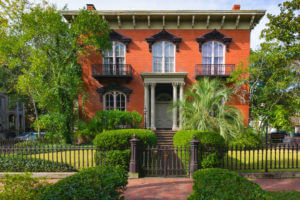 The Mercer-Williams House on Monterey Square gained attention after Midnight in the Garden of Good and Evil, but stories of strange activity began long before the book or movie. Guests have spoken about drops in temperature or the sense that someone unseen is nearby. The home’s elegant design and long history make every sound and shadow feel like part of its story.
The Hampton Lillibridge House on East St. Julian Street is one of Savannah’s oldest surviving homes connected to ghost tales. Built in the late 1700s and later moved during a restoration, it became known for odd happenings soon after the work began. Workers talked about footsteps in empty rooms and furniture that seemed to change position overnight. Some even claimed that an exorcism once took place inside. Neighbors still say that on certain nights, the house seems to stir again.
What Historical Events Shaped Haunted Savannah Facts?
Every ghost story in Savannah connects to a real moment in its history. The past here hasn’t always been calm, and many haunted Savannah facts begin with loss or tragedy that left deep marks on the city.
Yellow fever outbreaks struck Savannah several times during the 1800s, taking thousands of lives. With little understanding of how the disease spread, families often fell ill without warning. Entire blocks became temporary hospitals, and many victims were buried in unmarked graves. People walking near those old neighborhoods sometimes mention a sudden chill or the sound of coughing carried on the wind.
War added its own share of sorrow. The Siege of Savannah in 1779 was one of the hardest battles of the American Revolution, leaving hundreds of soldiers buried where they fell. During the Civil War, homes and churches turned into hospitals. The Marshall House Hotel on Broughton Street served as one of them, and visitors still talk about strange noises and cold spots in the halls. Some say the echoes of wounded soldiers never completely faded.
Fires changed the city again. Two major blazes, one in 1796 and another in 1820, destroyed large sections of Savannah and took many lives. New buildings went up over the ruins, but locals say you can still sense what came before. The mix of beauty and loss makes the city’s haunted reputation feel earned rather than imagined.
Some of the most famous haunted Savannah facts involve murder and violence. The death of Danny Hansford inside the Mercer-Williams House became one of the city’s most discussed events after it was retold in Midnight in the Garden of Good and Evil. Stories about the house at 432 Abercorn Street, tied to rumors of a family tragedy, continue to be told even when the details don’t always line up. Each story, true or not, adds another layer to Savannah’s reputation as one of the most haunted places in the country.
Why Do Haunted Savannah Facts Still Capture So Much Attention?
The stories tied to haunted Savannah facts help explain why the city feels so alive. People visit for its old streets, preserved homes, and the quiet sense that the past is still close. Savannah has lived through epidemics, wars, and fires, yet it’s held on to its beauty and spirit. That mix of survival and memory gives its ghost stories a depth that’s hard to find anywhere else.
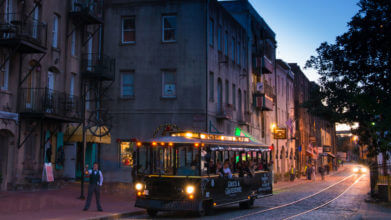
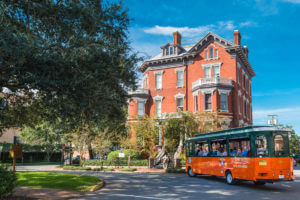 Old Town Trolley Tours and the Ghosts & Gravestones Tour help keep those stories alive through live narration and real history told in an engaging way. The guides share both documented events and local legends passed down through generations. The Ghost Hunters of Savannah® Paranormal Investigation at 416 West Liberty Street offers something more interactive. Visitors use real equipment to explore a location filled with eerie history, learning how professionals search for signs of the unexplained. It’s an experience that blends storytelling with investigation in a way that feels authentic and memorable.
Savannah’s past never fully disappears. You can sense it in the narrow streets, hear it in the stories told by locals, and feel it in the calm stillness that settles over the city after dark.
FAQs
Why is Savannah considered a haunted city?
Savannah’s reputation comes from its long and layered history. Fires, epidemics, and wars have all left marks that are still visible today. Many of the most talked-about haunted Savannah facts began with real events, such as homes built near old burial grounds and hospitals that once cared for the wounded. When you walk through the historic district at night, you can feel how much of that past still lingers.
Which buildings in Savannah are known to be haunted?
Several historic sites are tied to haunted Savannah facts. The Sorrel Weed House, the Marshall House Hotel, and the Hamilton-Turner Inn all have stories of sounds, shadows, and sudden chills that guests can’t explain. The Ghost Hunters of Savannah® Paranormal Investigation at 416 West Liberty Street invites guests to experience one of the city’s most mysterious locations firsthand. Using ghost-hunting tools and guided by experts, participants get to explore the same places that have fueled Savannah’s legends for generations.
Are there haunted cemeteries in Savannah?
Yes. Savannah’s cemeteries are an essential part of its haunted history. Colonial Park Cemetery, located downtown, holds thousands of burials and is known for reports of whispers and flickering lights. Bonaventure Cemetery is both beautiful and unsettling, with its stone angels, Spanish moss, and the famous statue of Little Gracie Watson. Laurel Grove Cemetery has its own quiet stories of strange sounds and unexplained movement among the trees. Each site adds a layer of truth to haunted Savannah facts.
Are there guided tours for haunted sites in Savannah?
Several guided experiences make it easy to explore haunted Savannah facts. The Ghosts & Gravestones Tour shares stories about real people and events tied to Savannah’s haunted reputation. Old Town Trolley Tours offers a comfortable way to reach these sites during the day, and the Ghost Hunters of Savannah® Paranormal Investigation lets visitors spend an evening searching for activity in one of the city’s most storied locations. Each tour gives a different look at Savannah’s history and mystery.