

Washington DC
SELECT CHANGE




PLAN YOUR TRIP






A Guide to the Arlington National Cemetery Changing of the Guard
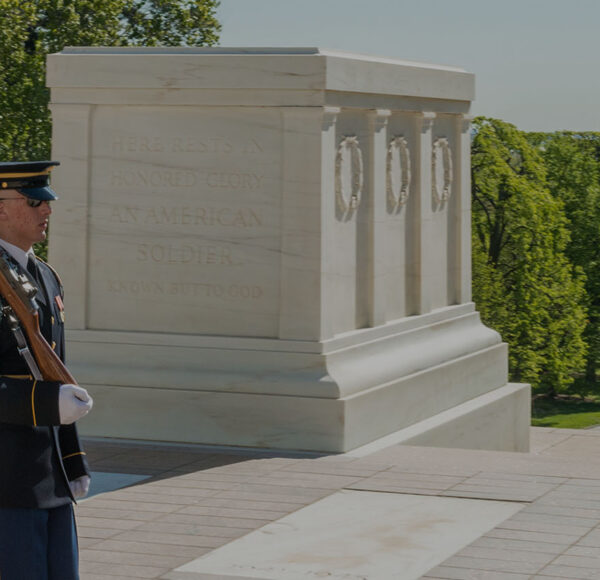
Standing on the high grounds overlooking the Potomac River, Arlington National Cemetery offers a powerful journey through American military tradition. Millions of visitors travel to the nation’s capital every year to pay their respects to the brave men and women who served in the armed forces. Among all the sacred sites within these rolling hills, the Tomb of the Unknown Soldier remains one of the most visited locations in Washington, D.C. Observing the Changing of the Guard allows guests to experience an extraordinary display of discipline, reverence, and military precision. Understanding the history, ceremony protocols, and visitor details ensures a meaningful visit to witness the Arlington National Cemetery Changing of the Guard.

The Finest of Military Traditions
The ceremony at the Tomb of the Unknown Soldier is conducted by the 3rd U.S. Infantry Regiment. Widely recognized as “The Old Guard,” this unit represents the oldest active infantry regiment in the Regular Army. The Old Guard took over sole responsibility for guarding the tomb on April 6, 1948. Serving as the official ceremonial unit of the U.S. Army, the soldiers selected for this duty maintain a constant watch over the site.
Sentinels maintain a continuous vigil 24 hours a day, 365 days a year. Rain, snow, intense heat, or cold temperatures never disrupt their post. To earn the honor of guarding the tomb, candidates endure rigorous testing and intensive training. Sentinels memorize extensive details regarding the history of the cemetery, learn complex drill routines, and spend hours preparing their uniforms. Every brass button, ribbon, and crease must meet flawless standards. The absolute devotion displayed during the Arlington National Cemetery Changing of the Guard reflects the deep respect these soldiers hold for the fallen service members interred at the site.
Hop On Hop Off DC Tour Tickets




Save up
to 5%
to 5%
SEE THE BEST OF DC & ARLINGTON
- Includes Tickets for the Hop On Hop Off DC Tour & the Arlington National Cemetery Tour
- Celebrating 40 Years as Washington DC's Original Storyteller!
- Save 50%* on the Arlington Tour
- The Best Package for American History Enthusiasts
- Easy Transfer to Arlington
- Tours Can Be Taken on Different Days
- Old Town Trolley Hop On Hop Off Tour Details
- Hop On Hop Off at 15 Stops near the National Mall
- Fully Narrated 90 Minute Tour
- Best Views with Stadium Seating
- Real-Time Trolley Tracking Map
- Cushioned Seating
- Stories Narrated by Local Experts
- Smart-Sync Historic Visuals
- Tallest Vehicles Allowed by Law
- Free WiFi
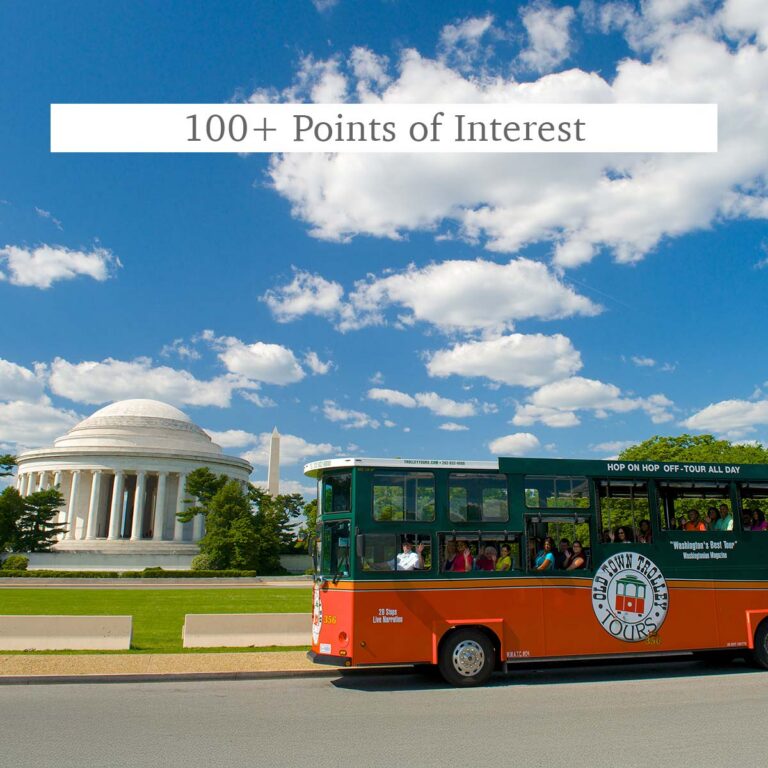
- 100+ Points of Interest
- American Owned and Operated
- All Weather Vehicles
- Start at Any Designated Stop
- “One of the 10 best hop-on hop-off tours in the world” - Forbes
- Top Rated Tour by Washington Post
- Free Additional DC Guides
- Arlington National Cemetery Tour Details
- The Only Official Tour of the Arlington National Cemetery
- Hop On Hop Off at 7 stops on weekdays and 8 stops on weekends Across 3+ Miles
- Visit the Tomb of the Unknown Soldier
- Tours Every 30 Minutes
- Stories Narrated by Local Experts
- Visit Notable Graves and Memorials
- Comfortable Vehicles
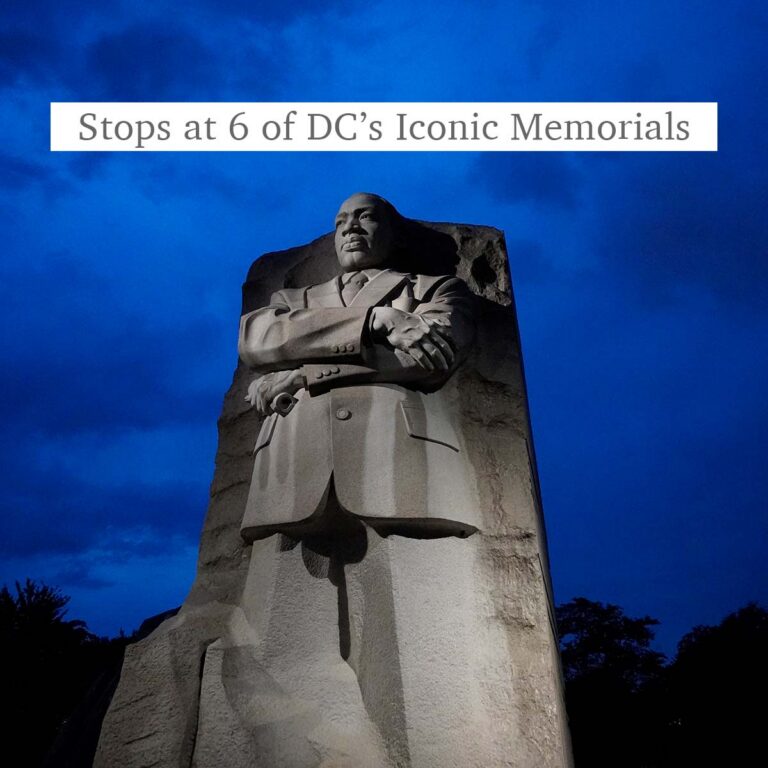



ENJOY A NIGHT OF MOONLIGHT MERRIMENT
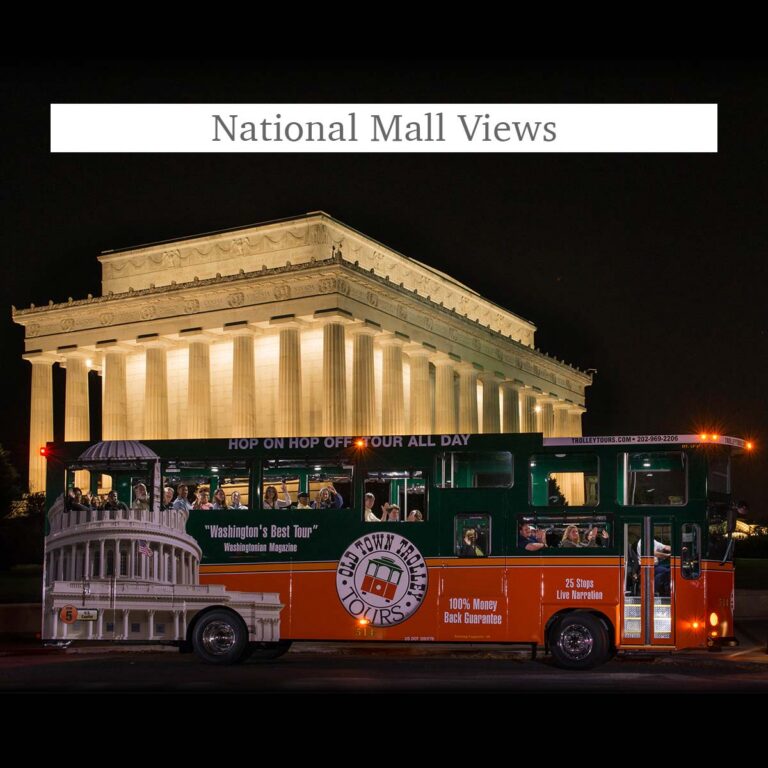
Experience the beauty and awe of our country’s most stirring monuments in a whole new way… by moonlight.
- See the National Mall Monuments at Night
- Stops at 6 of DC’s Iconic Memorials
- Includes the Lincoln Memorial, FDR Memorial, Martin Luther King Jr. Memorial, & More
- Scenic Photo Opportunities
- Stories Narrated by Local Experts
- Fully Narrated 2.5 Hour Tour
- Best Views with Stadium Seating
- Flexible Start and End Points



Save up
to 15%
to 15%
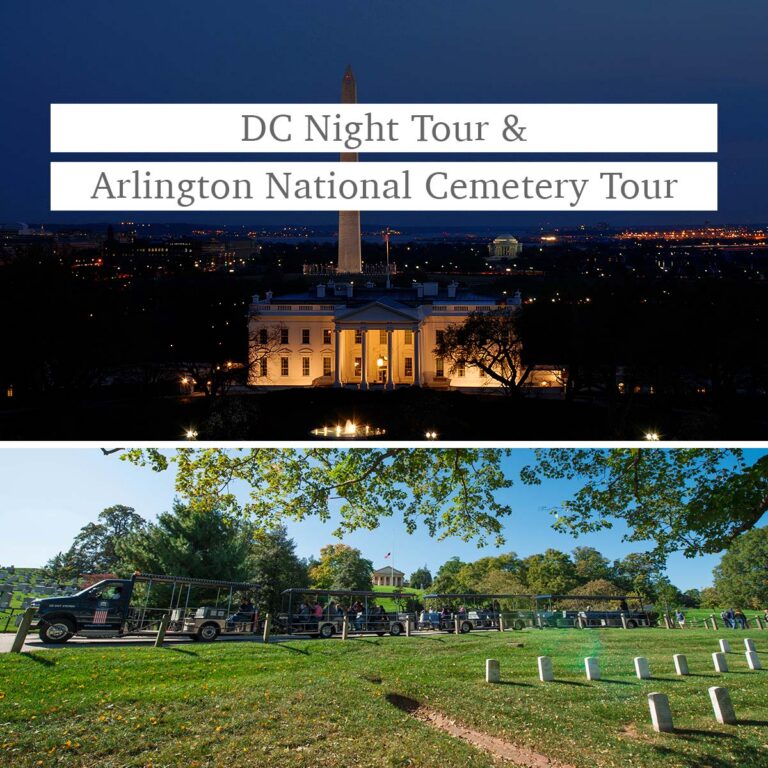
SEE DC AT NIGHT AND HONOR OUR HEROES
Experience the beauty and awe of our country’s most stirring monuments in a whole new way… by moonlight. Arlington National Cemetery is an enduring tribute to those who’ve dedicated their lives to defending the ideals of our nation. Explore the rich history of this national landmark from the comfort of our tour vehicles.
- Includes Tickets for the Monuments by Moonlight DC Night Tour & the Arlington National Cemetery Guided Tour
- Save 50%* on the Arlington Tour
- The Best for a Guided Tour Experience
- Tours Can Be Taken on Different Days
- Monuments by Moonlight Tour Details
- See the National Mall Monuments at Night
- Stops at 6 of DC’s Iconic Memorials
- Includes the Lincoln Memorial, FDR Memorial, Martin Luther King Jr. Memorial, & More
- Scenic Photo Opportunities
- Stories Narrated by Local Experts
- Fully Narrated 2.5 Hour Tour
- Best Views with Stadium Seating
- Flexible Start and End Points
- Arlington National Cemetery Tour Details
- The Only Official Tour of the Arlington National Cemetery
- Hop On Hop Off at 7 stops on weekdays and 8 stops on weekends Across 3+ Miles
- Visit the Tomb of the Unknown Soldier
- Tours Every 30 Minutes
- Stories Narrated by Local Experts
- Visit Notable Graves and Memorials
- Comfortable Vehicles
History of the Tomb
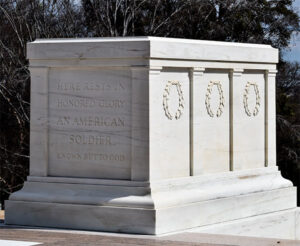 To fully grasp the significance of the Arlington National Cemetery Changing of the Guard, one must first understand the origins of the Tomb of the Unknown Soldier.
- Establishment in 1921: Congress authorized the burial of an unidentified American service member on March 4, 1921. On November 11, 1921, President Warren G. Harding presided over the burial ceremony at the plaza of the Memorial Amphitheater. The remains were transported from France aboard the USS Olympia after Army Sergeant Edward Younger selected one casket from four unidentified American combatants.
- The Sarcophagus: In 1932, a seven-piece Colorado Yule marble sarcophagus was placed above the World War I Unknown grave. Constructed at a cost of $48,000, this monument features carved relief figures and inscriptions honoring the unknown dead.
- Later Additions: Following World War II and the Korean War, additional unknown service members were selected to represent those who made the ultimate sacrifice. In May 1958, unidentified combatants from both conflicts were interred in crypts adjacent to the marble sarcophagus after lying in state at the U.S. Capitol.
- Evolution of the Guard: Civilian guards initially protected the tomb starting in 1925 to prevent visitors from walking across the grave. Military guards from the 3rd Cavalry at Fort Myer took over duty in 1926. In 1937, a continuous 24-hour military watch was established to guarantee permanent protection. The 3rd U.S. Infantry Regiment assumed the mission in 1948
The site stands as a national tribute to all service members whose names and individual sacrifices remain known only to God.

The Precision and Protocol of the Ceremony
The Arlington National Cemetery Changing of the Guard follows exact military routines that emphasize extreme discipline and honor. Spectators who gather around the plaza observe movements executed with mechanical exactness.
The Sentinel's Routine
During a watch shift, the Sentinel walks across a long black rubber mat laid behind the tomb. Every step and posture change holds symbolic meaning:
- The Sentinel marches 21 steps southward down the black rubber mat.
- The Sentinel stops and turns to face east toward the tomb for exactly 21 seconds.
- The Sentinel turns to face north, shifts the weapon to the outside shoulder, and pauses for 21 seconds.
- The Sentinel marches 21 steps down the mat to the starting point.
- The Sentinel turns to face east for 21 seconds, then turns south, shifts the weapon to the outside shoulder, and waits 21 seconds before repeating the cycle.
The repetition of 21 signifies the 21-gun salute. This ritual represents the highest military honor given to a military officer or foreign dignitary.
The placement of the weapon carries equal significance. The Sentinel always carries the rifle on the shoulder farthest from the tomb. When the guard changes direction on the mat, the rifle moves to the outside shoulder. This positioning signals that the Sentinel stands as a barrier between the public and the sacred site.
The Relief Exchange
The actual relief procedure initiates when the relief commander approaches the black mat. The commander addresses the gathered spectators, requesting silence and respect throughout the ceremony.
The commander conducts a detailed white-glove inspection of the incoming guard’s M14 rifle. Every component of the weapon, including the stock, receiver, and sling, undergoes careful evaluation. The commander checks the guard’s uniform, belt, gloves, and shoes for minor imperfections. Sentinels moisten their gloves prior to the walk to ensure a firm grip on the rifle during handling.
Following the successful inspection, the outgoing guard stops to join the relief commander and incoming Sentinel. The outgoing guard delivers a formal verbal exchange, passing orders to the incoming Sentinel. Once the transfer completes, the incoming guard assumes the march down the mat, maintaining uninterrupted protection of the Tomb of the Unknown Soldier.

Know Before You Go
Planning a trip to witness the Arlington National Cemetery Changing of the Guard requires attention to key guidelines, operational hours, and visitor rules.
Hours of Operation
Arlington National Cemetery grounds open daily at 8 a.m. and close at 5 p.m. The ceremony occurs on a consistent schedule throughout the year. From April 1 to October 31, the guard changes every 30 minutes on the hour and half hour. From November 1 to March 31, the guard changes every hour on the hour. During the hours when the cemetery is closed to the public, the guard changes every two hours to maintain an unbroken watch.
Security Requirements
All visitors entering the cemetery must go through security screening checkpoints. Visitors aged 18 and older are required to present a valid state-issued photo identification card or passport. Arriving early allows adequate time to clear security lines before scheduled ceremonies.
Required Etiquette
Because the Tomb of the Unknown Soldier serves as an active burial ground and national memorial, strict decorum is enforced. Spectators must stand during the entire relief ceremony unless physical limitations prevent standing. Absolute silence is required at all times around the plaza. Cheering, loud talking, clapping, and improper behavior are prohibited.
Prohibited Items
Security screening limits items brought onto the grounds. Coolers, weapons, large backpacks, and bulky luggage are prohibited inside the cemetery. Small personal items, purses, and cameras pass through inspection scanners at the visitor center entry gates.
Dress Code and Footwear
Visitors should dress respectfully for a memorial setting. Shirts and shoes are required. Because the grounds encompass rolling terrain with steep paths, wearing comfortable walking shoes is recommended for all guests.
Tour Accessibility
Navigating the extensive cemetery grounds can involve long walks uphill. Though, Arlington National Cemetery Tours is an excellent option for ease of navigation, top-of-the-line tour narration, and more.
Nearby Sites to the Tomb of the Unknown Solider
Visiting the plaza of the Tomb of the Unknown Soldier puts travelers close to several other historical landmarks within the cemetery grounds. Taking an official tour route makes reaching these locations simple and informative.
President John F. Kennedy Gravesite

Located a short walk from the Memorial Amphitheater, the gravesite of President John F. Kennedy remains one of the most visited locations in the cemetery. The site features the Eternal Flame, which burns continuously over the resting place of the 35th president of the United States. Nearby stones are inscribed with famous quotes from his 1961 inaugural address. His wife, Jacqueline Bouvier Kennedy Onassis, and two of their children are interred alongside him.
Arlington House, The Robert E. Lee Memorial

Prominently situated at the top of the hill, Arlington House offers commanding views of the Washington, D.C., skyline. Built originally by George Washington Parke Custis, the estate eventually became the home of Confederate General Robert E. Lee. During the Civil War, Union forces seized the property, and Quartermaster General Montgomery C. Meigs designated the surrounding grounds as a national military burial site in 1864. The house and grounds provide historical context on the origins of the cemetery.
General John J. Pershing Gravesite

Located in Section 34, the grave of General John J. Pershing honors the famous leader who commanded the American Expeditionary Forces in Europe during World War I. Pershing selected a standard government headstone similar to those used for the soldiers who served under his command, reflecting his modesty and dedication to military equality.
Convenient Exploration With Arlington National Cemetery Tours

Exploring these spread-out historic sites on foot requires significant physical effort. Utilizing Arlington National Cemetery Tours allows guests to ride comfortably between major stops. Guided narration provides historical details about generals, statesmen, and service members buried throughout the grounds.
Selecting a combo pass featuring Old Town Trolley Tours and Arlington National Cemetery Tours provides seamless travel throughout the city. Guests can hop off to explore iconic spots across the National Mall, take in the evening views on the Monuments by Moonlight Tour®, and cross the Potomac River directly to the cemetery grounds. With comfortable seating, knowledgeable tour guides, and convenient stops, Historic Tours of America® ensures your family experiences the finest sightseeing in Washington, D.C.
FAQs
The best way to travel to the Tomb of the Unknown Soldier inside the cemetery is by taking Arlington National Cemetery Tours. The hop-on, hop-off trolley service picks up visitors near the Welcome Center and stops directly at the Memorial Amphitheater, significantly reducing the steep uphill walk to the plaza.
The frequency of the ceremony depends on the time of year. From April 1 to October 31, the guard change occurs every 30 minutes on the hour and half hour. From November 1 to March 31, the guard change occurs every hour on the hour. When the cemetery grounds are closed during the night, the guard changes every two hours.
Yes, all visitors must clear security screening checkpoints at the entrance. Adult visitors aged 18 and older must present a valid state-issued photo ID or passport. All bags and personal belongings pass through inspection equipment upon entry.
The Sentinels take 21 steps down the rubber mat to symbolize the 21-gun salute. The 21-gun salute represents the highest military honor rendered to military figures and heads of state. The Sentinels also pause for 21 seconds at each turn for the same symbolic reason.
Photography is permitted during the ceremony, provided flash photography is not used and spectators remain behind the designated ropes. Talking, making noise, or moving around during the ceremony is strictly forbidden. The relief commander asks all guests to remain silent and standing throughout the event to preserve the dignity of the site.