




Copp’s Hill Burying Ground
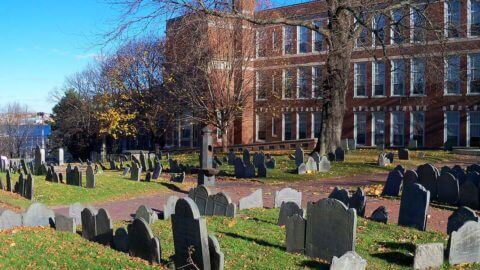
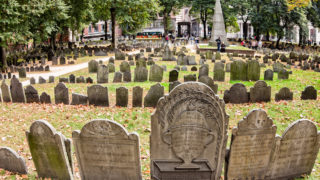
The gravestones in Copp’s Hill Burying Ground, Boston’s second oldest burying ground, tell the story of the population of the North End in colonial times. Originally known as Windmill Hill, the hill took the name of William Copp, a shoemaker who donated the land for a burying ground in 1659. It is the place of rest for thousands of artisans, craftspeople, and merchants. Some of the well known individuals are Increase and Cotton Mather, of the family of ministers, Robert Newman, sexton of the Old North Church at the time of Paul Revere’s ride, Edmund Hart, shipyard owner and builder of the USS Constitution, and Shem Drowne, the artist who made the weathervane for Faneuil Hall, among others.
Haunted Guide to Copp’s Hill Burying Ground
What Makes Copp’s Hill Burying Ground So Eerie and Fascinating?
In the North End of Boston sits Copp’s Hill Burying Ground, one of the oldest cemeteries in the city. Founded in 1659, it’s a key stop on the Freedom Trail and an unforgettable glimpse into early Boston life. The old gravestones lean in the uneven ground, their lettering faded by time, and the air carries a stillness that feels almost alive. It’s a place where the past lingers in every corner.
Many visitors say that peace is only part of what you’ll find here. Stories of strange lights, ghostly figures, and unexplained sounds have surrounded Copp’s Hill Burying Ground for generations. Locals and travelers often hear about these tales on Boston ghost tours, which include the cemetery as one of their most talked-about stops. This guide explores the history, burials, and hauntings that make it such an important and mysterious landmark in the city.
How Did Shoemaker’s Hill Become Copp’s Hill Burying Ground?
Long before it became a cemetery, the hill was known as Shoemaker’s Hill, named after William Copp, a local craftsman who once owned the land. When the community needed a new burial site in the mid-1600s, the area was chosen for its height and location above the busy waterfront. Over time, it grew into Copp’s Hill Burying Ground, a final resting place for many of Boston’s earliest families.
During the Revolutionary War, British soldiers used the hill to overlook the harbor and nearby Charlestown. It’s said they passed the time by firing their muskets at headstones in Copp’s Hill Burying Ground, leaving visible marks that can still be seen today. One of the graves they damaged belonged to Daniel Malcolm, a merchant and outspoken patriot who resisted British rule. His scarred marker still draws attention from visitors, many of whom see it as a silent witness to Boston’s fight for freedom.
Years later, construction on nearby Snowhill Street unearthed parts of the old burial ground. Workers found coffins and remains that had to be moved, but not everything was handled carefully. Locals believe that this disturbance left the spirits uneasy, which might explain why many visitors report strange feelings when walking through Copp’s Hill Burying Ground at night.
Who Are the Most Famous Figures Buried at Copp’s Hill Burying Ground?
Every grave in Copp’s Hill Burying Ground tells part of Boston’s story. Some of the city’s most well-known names rest here, along with the everyday people who built its early neighborhoods.
One of the most famous families buried here is the Mather family. Increase Mather and his son Cotton Mather were powerful ministers whose words shaped Puritan Boston. Cotton Mather is often remembered for his connection to the Salem witch trials, a legacy that still makes his grave one of the most visited.
Visitors can also find the grave of Robert Newman, the church sexton who helped Paul Revere by hanging the signal lanterns during the Midnight Ride. Around him are the graves of artisans, merchants, and freed African Americans who made up Boston’s diverse Colonial community.
When you visit Copp’s Hill Burying Ground, it feels like walking through a small outdoor museum. Guides on Boston ghost tours often stop here to tell stories of the people buried beneath the stones, mixing real history with ghostly tales that keep their memories alive.
Why Is Copp’s Hill Burying Ground Considered a Paranormal Hot Spot?
As daylight fades and the shadows lengthen across Boston’s North End, Copp’s Hill Burying Ground takes on a feeling that’s hard to describe. The headstones tilt at uneasy angles, the grass rustles even when the air is still, and visitors often say the atmosphere feels charged. Stories about this old cemetery have been told for more than a century, and many believe the spirits here still refuse to rest.
One of the most famous legends is that of Reverend Increase Mather. Locals say his ghost still walks the paths after sunset, especially near the Mather family plot. Visitors describe seeing a tall, robed figure watching from the shadows or feeling a sudden coldness when passing by his grave. Some claim to hear faint muttering, as if the reverend is still delivering sermons to an unseen congregation. These stories have been repeated so often that many who visit Copp’s Hill Burying Ground find themselves glancing over their shoulder, half-expecting to see him.
Photographs taken on misty evenings often reveal strange flashes of light hovering near the graves. Paranormal groups have documented glowing spheres, distorted shapes, and unexplained shadows in their images. Visitors sometimes report chills, a strong sense of being watched, or faint whispers that vanish when they turn around. A few even claim to have captured faces peeking from behind the headstones. All of this has made Copp’s Hill Burying Ground one of the most talked-about haunted places in Boston.
What Legends Still Linger Around Copp’s Hill Today?
Not all the ghost stories at Copp’s Hill Burying Ground are tied to a single person. Many believe the spirits disturbed during nearby construction long ago still wander here. The digging and relocation of old graves during the 1800s left many remains unaccounted for, and residents have passed down tales of lingering energy ever since.
Visitors sometimes speak of a woman in a dark dress who appears along the cemetery wall. She walks slowly through the rows of stones before vanishing without a sound. Others mention flickering lights moving through the fog as if carried by invisible hands. Some say they have seen what looks like candlelight weaving between the graves, though no one is there when they look closer.
Tour guides who include Copp’s Hill Burying Ground in their routes often say that no two nights are ever the same. Each group seems to witness something different, whether it’s a strange photo, a sudden cold wind, or the feeling that someone unseen is walking just behind them. Over time, these stories have become part of the cemetery’s legacy, passed from one visitor to another like folklore that refuses to fade.
How Can Visitors Experience the Spirits on Boston Ghost Tours?
For those who want to experience the eerie side of Boston firsthand, Boston ghost tours are the perfect way to explore Copp’s Hill Burying Ground safely after dark. These guided experiences blend history with the supernatural, giving guests a chance to see the city through the lens of its haunted past. The graveyard’s stillness at night, the soft glow of lantern light, and the guide’s steady voice all combine to create an atmosphere that feels both chilling and fascinating.
Guides share the stories of Reverend Mather and other restless spirits while walking visitors through narrow pathways lined with centuries-old stones. Many of the tales are drawn from eyewitness accounts, local archives, and historical records. Guests often leave with photographs or memories that keep them wondering long after the tour ends.
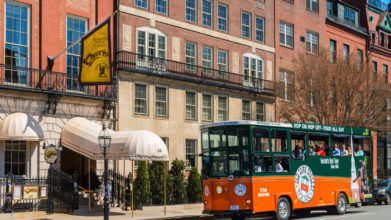
Among the most popular Boston ghost tours is the Ghosts & Gravestones® Frightseeing® Tour, where guests board the Trolley of the Doomed. The tour highlights several of Boston’s most haunted sites, including Copp’s Hill Burying Ground. The ghoulish guides are known for their theatrical flair and deep knowledge of history. This spooky adventure brings each ghost story to life with suspense and a touch of humor. It’s an experience that blends local history, folklore, and the thrill of the unknown, making it one of the best ways to see Boston’s darker side.
Why Does Copp’s Hill Burying Ground Still Capture Boston’s Imagination?
Copp’s Hill Burying Ground is one of the oldest resting places in Boston and one of the most intriguing. Its uneven rows of gravestones tell the story of a city that has lived through war, religion, and change. Visitors walk through quiet paths where time seems to stand still, surrounded by the names of early settlers, ministers, and patriots. It’s a place where history feels close enough to touch.
Many Boston ghost tours include Copp’s Hill Burying Ground because it blends deep history with eerie local stories. Guides share accounts of strange lights and whispers among the stones, leaving visitors with a lasting curiosity about what might still linger here. Whether you come for the history or the mystery, the cemetery’s calm presence continues to leave an impression long after you leave the hill.
FAQs
Q1. Is Copp’s Hill Burying Ground one of the haunted cemeteries in Boston?
Yes. Copp’s Hill Burying Ground is often listed among the most haunted places in the city and is a highlight on several Boston ghost tours. Visitors and guides have described sudden chills, flickering lights, and shadows that appear near the older graves. During the Revolutionary War, British soldiers camped here and damaged several headstones, including that of patriot Daniel Malcolm. Some say this act disturbed the peace of those buried here, adding to the cemetery’s long reputation for hauntings. Today, both ghost hunters and historians visit Copp’s Hill Burying Ground to experience its uneasy stillness for themselves.
Q2. How can I see Copp’s Hill Burying Ground at night?
The cemetery closes before dark, but visitors can still explore it safely by joining one of the Boston ghost tours. The Ghosts & Gravestones Frightseeing Tour includes a stop near Copp’s Hill Burying Ground and gives guests a close look at one of the city’s oldest cemeteries. Guides share real accounts of hauntings and stories about the people buried there. The mix of quiet streets, lantern light, and storytelling creates an experience that captures what makes Copp’s Hill Burying Ground so compelling at night.
Q3. Is Copp’s Hill Burying Ground a stop on the Freedom Trail?
Yes. Copp’s Hill Burying Ground is an important stop on Boston’s Freedom Trail and sits near other historic sites from the Colonial period. Many visitors walk the trail to learn about the city’s Revolutionary history before joining one of the Boston ghost tours to explore its haunted past. The cemetery is known for its view over the North End and the harbor, where many of the events that shaped Boston’s early years unfolded. For anyone tracing the city’s story from its earliest days to the present, Copp’s Hill Burying Ground is an essential stop.
Q4. Who is the most famous person buried in Copp’s Hill Burying Ground?
Reverend Increase Mather and his son Cotton Mather are the best-known figures buried in Copp’s Hill Burying Ground. Both were prominent Puritan ministers who shaped early Boston and became known for their influence during the Salem witch trials. Visitors on Boston ghost tours often hear stories about the Mathers and the role they played in shaping the city’s spiritual life. The cemetery also includes merchants, artisans, and freed slaves whose stories reflect Boston’s diverse history. Exploring Copp’s Hill Burying Ground offers a quiet way to connect with that history and see how deeply it still runs through the city.
Q5. Why is Copp’s Hill Burying Ground an important part of Boston ghost tours today?
Copp’s Hill Burying Ground remains a centerpiece of Boston ghost tours because it combines real history with deeply rooted folklore. The cemetery has stood since 1659, making it a living record of the city’s earliest years. Its uneven stones and faded inscriptions create a haunting setting for stories that blend fact and legend. Many guides say it’s one of the few places where Boston’s Revolutionary spirit and supernatural lore truly intersect. For anyone exploring the darker side of the city’s history, Copp’s Hill Burying Ground is a must-see stop filled with mystery, memory, and meaning.