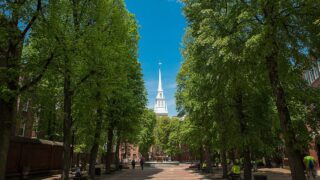
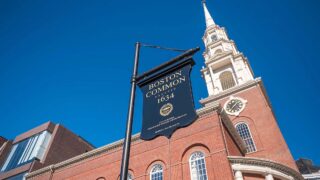
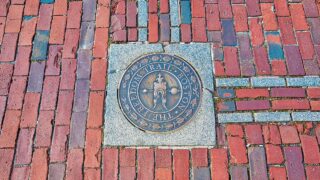
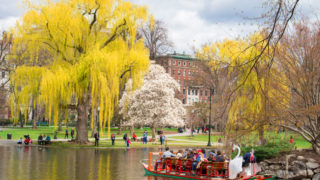
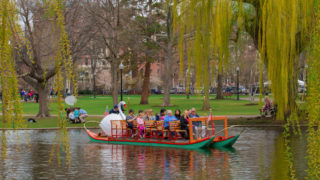
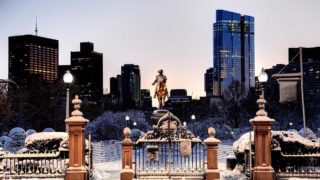
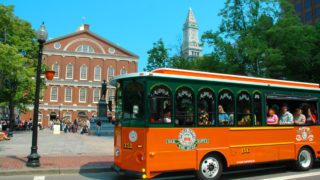
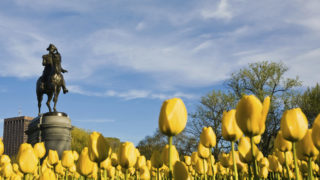
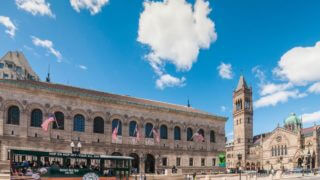
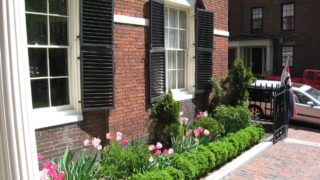
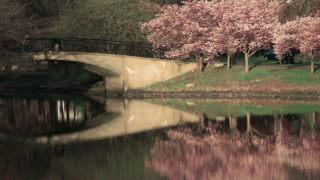
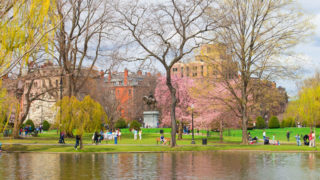
Established in 1634, the 50-acre Boston Common is the oldest public recreation area in the country. Colloquially known as “the Common,” the park is one of the gems in the Emerald Necklace, a series of parks, urban open spaces and greenways that meander through several Boston neighborhoods and stretch to Roxbury. Boston Common, situated across from the Massachusetts State House, forms the southern base of Beacon Hill and is delineated by Beacon, Park, Tremont, Boylston and Charles streets.
Ultimate Guide to Boston Common - More Info
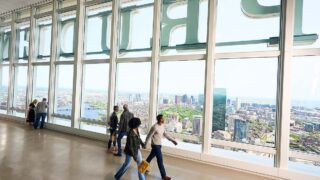
View Boston is the city’s preeminent observatory experience offering unrivaled 360-degree views of Boston’s breathtaking city skyline. Encompassing the top three floors of Boston’s iconic Prudential Tower, the 59,000-square-foot destination features indoor and outdoor panoramic views of the city, an open-air roof deck, two dining destinations, state-of-the-art immersive experiential exhibits, and more. Whether discovering famed landmarks and coveted hidden gems or meeting friends for a sunset cocktail, your unforgettable Bostonian experience begins here.
View Boston - More Info
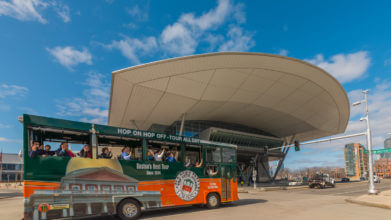
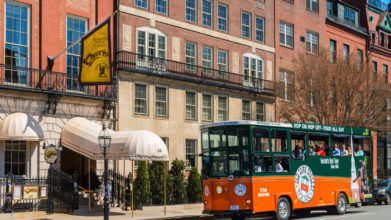
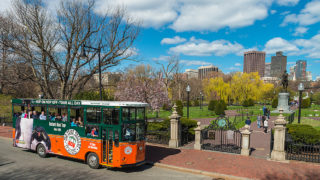
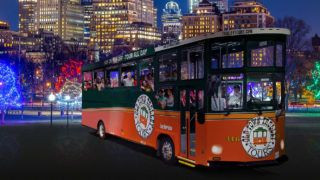
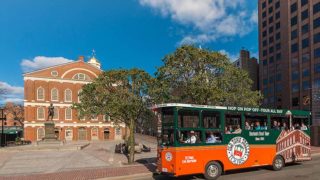
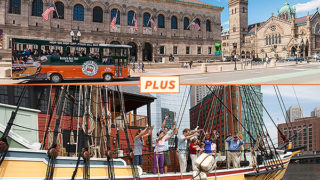
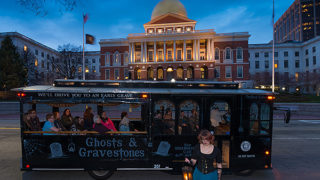
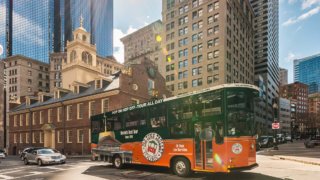
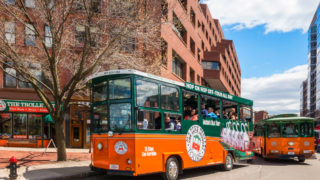
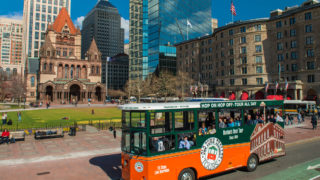
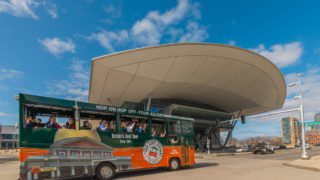
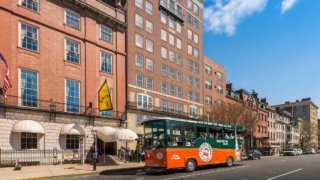
Get MORE out of your summer in Boston aboard the iconic Old Town Trolley and see the best first!
One of the most popular vacation destinations in the USA, Boston offers visitors an abundance of history, art, music, dining and cultural attractions. But for many, it’s the lesser known spots and points of interest that draw their attention, the less touristy places that provide totally unique Boston experiences. Check out these hidden gems in and around the city on your next trip.
Hidden Gems in Boston - More Info
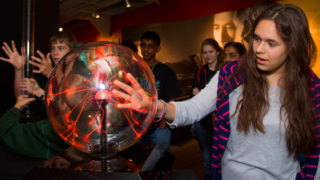
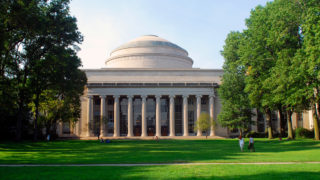
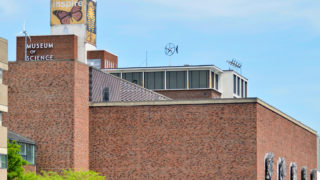
The M.I.T. Museum is a window into the world of some of the latest and most exciting research at MIT. Visitors can explore over 150 years of education and research in the forefront of science, engineering, and technology. Located at 265 Massachusetts Avenue, the Museum presents an exciting array of exhibitions, covering everything from artificial intelligence and oceanography, to architecture, three-dimensional holograms, and the world’s largest collection of the much loved kinetic sculptures by Arthur Ganson.
Approximate Time to Allow: 2 hrs
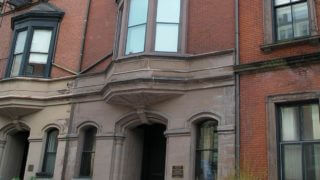
The Gibson House offers visitors a glimpse into 19th century living in Boston’s Back Bay. As one of the Back Bay’s first residences, the Gibson House was built in the mid-19th century and remains the unspoiled residence of a well-to-do Victorian Boston family. Kitchen, scullery, butler’s pantry, and baths, as well as formal rooms and personal quarters are filled with the Gibsons’ original furniture and personal possessions. Located on 137 Beacon Street, between Arlington and Berkeley Streets, Boston.
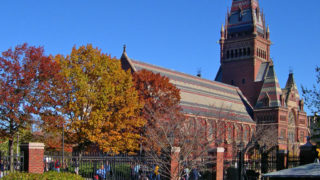
Founded in 1636, Harvard is the oldest university in the United States. Among its graduates are seven U.S. Presidents of the United States: John Adams, John Quincy Adams, Theodore and Franklin D. Roosevelt, Rutherford B. Hayes, John F. Kennedy and Barack Obama. The campus is distinguished by a diverse collection of historic buildings and the acclaimed Harvard University Museums.
Harvard Square, Cambridge
4 Stop 4 $
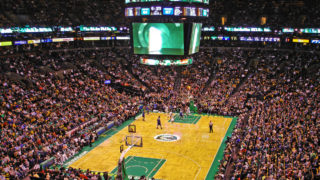
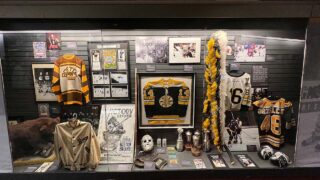
The Sports Museum is located on the 5th and 6th floors of the TD Garden. This Boston attraction features exhibits organized by sport, including hockey (Boston Bruins, Hartford Whalers, and Olympics), basketball (Boston Celtics), football (New England Patriots), and baseball (Boston Red Sox). Concourse galleries also feature boxing, rugby, soccer and artifacts from the Boston Marathon. The museum has life-size statues of Carl Yastrzemski, Bobby Orr, Larry Bird, and Harry Agganis, an old Boston Garden hockey penalty box, and thousands of other items.
16 Stop 16 $
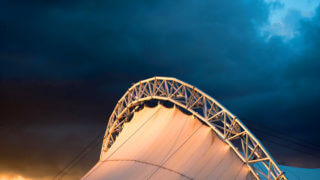
One of Boston’s premier concert venues, the Pavilion, is open seasonally from May through October. From Tony Bennett to K.D. Lang to Bonnie Raitt to Jay-Z; they have all played at the Bank of America Pavilion, and this year’s lineup looks just as exciting as past years. With a perfect Boston Harbor location and many outstanding “sea oriented” restaurants located nearby, as well as a cutting edge New York style steakhouse, Del Frisco’s, spending an evening in the Seaport District can be a real Boston experience. When the concert is over, visit Harpoon Brewery and Beer Hall just 100 yards away from the Pavilion.
9 Stop 9 $
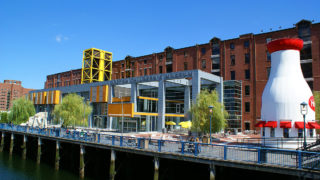
Boston Children’s Museum is the second oldest and one of the most influential children’s museums in the world. For over 100 years it has been engaging children in joyful discovery experiences that instill an appreciation of our world, develop foundational skills, and spark a lifelong love of learning. The Museum’s exhibits and programs emphasize hands-on engagement, learning through experience, and employing play as a tool to spark the inherent creativity, curiosity, and imagination of children. Designed for children and families, Museum exhibits focus on STEAM (Science, Technology, Engineering, Arts, Math), environmental awareness, and health & fitness.
Boston Children’s Museum - More Info
9 Stop 9 $
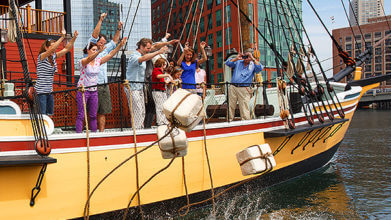
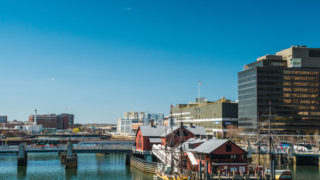
Located on the Congress Street Bridge, the Boston Tea Party Ships & Museum is an interactive, high tech, floating museum. Unlike anything you’ve ever experienced before, this unique museum sits on a barge in the water, includes tours on restored tea ships and a stunning, interactive documentary that immerses you into the events that led up to the American Revolution. Touch, feel, see and hear what the patriots felt when their passions and angers flared at the injustice of taxation without representation. Participate in multi-sensory exhibits, witness dramatic reenactments by professional actors and historians and discover the true story behind the Boston Tea Party.
Boston Tea Party Ships & Museum - More Info
8 Stop 8 $
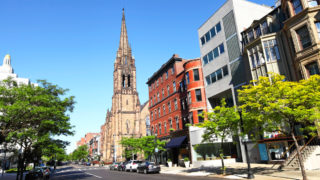
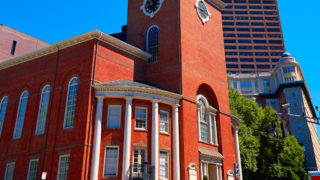
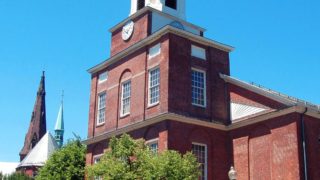
The Park Street Church was founded in 1809 by 26 locals who were mainly former members of the Old South Meeting House. The church became known as Brimstone Corner, possibly because the area was used for the storage of gunpowder during the War of 1812. In 1816, the Park Street Church joined the Old South Church and formed the City Mission Society, which served Boston’s poor. The church was the site of many firsts, including the nation’s first Sunday School in 1818, first prison aid in 1824, and William Lloyd Garrison’s first public statement against slavery in 1829. Park Street Church can be seen from the various surrounding neighborhoods because of its steeple, rising 217 ft. high. Open to visitors summer time only.
5 Stop 5 $
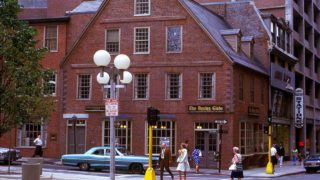
The Old Corner Bookstore, located on the corner of School and Washington Streets, was built in 1718 as an apothecary shop and residence. During the 19th century, it housed the Ticknor and Fields Publishing House and later became the literary center of Boston. Authors such as Henry Wadsworth Longfellow, Ralph Waldo Emerson, Nathaniel Hawthorne, and Henry David Thoreau brought manuscripts here to be published. It is now known as the Globe Corner Bookstore and specializes in New England travel books and maps. Before the Old Corner Bookstore was built, the original building was the home of Mrs. Anne Hutchinson, who was condemned for her dissent from Puritan orthodoxy.
5 Stop 5 $
Established in 1635, the Boston Latin School was the first public school in America. By inviting boys of any social class to enter, the school set a precedent for tax-supported public education. The Boston Latin School’s curriculum is inspired by the 18th century latin-school movement, which centered on the idea that study of the classics was the basis of an educated mind. Some of the school’s most famous students were Ben Franklin, Samuel Adams, Henry Ward Beecher, Ralph Waldo Emerson, John Hancock, and Leonard Bernstein. A statue of Benjamin Franklin keeps a watchful eye on the site and a mosaic on the sidewalk behind King’s Chapel marks the spot as well.
8 Stop 8 open Mon-Sun $
The Black Heritage Trail features various homes, memorials, and sites that are significant in the history of Boston’s 19th century African American community. The first slaves arrived in 1638 and by 1705 there were over 400. At this time there were also the beginnings of a free black community in the North End, and by 1790, the time of the first census, Massachusetts reported no slaves. The trail includes the Robert Gould Shaw & the 54th Regiment Memorial, first black regiment, the George Middleton House, the oldest home built by African Americans on Beacon Hill, and the Phillips School, one of Boston’s first schools with an interracial student body.
Black Heritage Trail - More Info
5 Stop 5 $
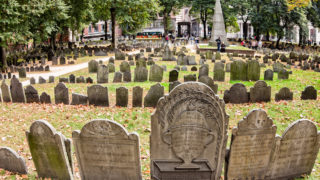
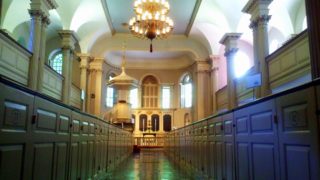
Kings Chapel is a Christian Unitarian church located on Tremont and School Streets. The church was organized in 1686 as an Anglican Church. In 1785 it became the oldest member of the Unitarian Universalist Association and the first Anglican Church. Beside the church is the Kings Chapel Burying Ground, which was Boston’s only burial ground for 30 years. Many historical figures are buried here, including John Winthrop, the colony governor, William Dawes, who rode with Paul Revere on the Midnight Ride, Mary Chilton, the first woman off the Mayflower, and William Emerson, Ralph Waldo Emerson’s father. The original building was a wooden church built in 1688 and it was replaced by the current stone building in 1754. The bell was hung in 1772 and was recast by Paul Revere in 1814; it still rings at services today.
6 Stop 6 open Mon-Sat from 10am-4pm $
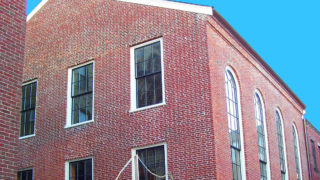
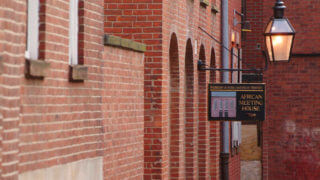
The Museum of African American History is New England’s largest museum dedicated to telling the story of organized black communities from the Colonial period through the 19th century. A variety of exhibits, programs, events and educational activities are presented that showcase the stories of black families – from how they lived, educated their children, worshiped, worked, created artwork and how they organized politically to advance the cause of freedom. Located within the African Meeting House, which is the oldest African Meeting House in America and inside the Abiel Smith School, which was the first building in the country constructed for the sole purpose of housing a black public school, the buildings themselves are a big part of the rich heritage and incredible past of the African Americans in New England.
Museum of African American History - More Info
8 Stop 8 $
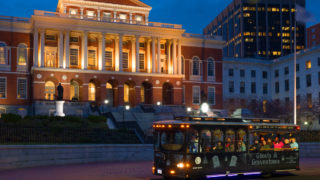
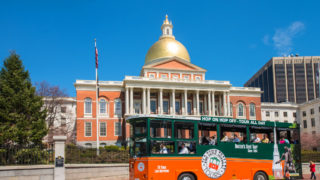
In the distinctive gold-domed building atop Beacon Hill, the past meets the present. On weekdays, you can discover Massachusetts’ history on a free tour of the center of the state government. The building, completed in 1798, was designed by Charles Bulfinch to replace the Old State House.
In addition to housing the state government, the State House also displays various portraits of governors, murals depicting the state’s heritage, and statues inside and on its grounds. The building is recognizable because of its dome sheathed in copper and covered by 23 karat gold, as seen in the film The Departed.
6 Stop 6 $
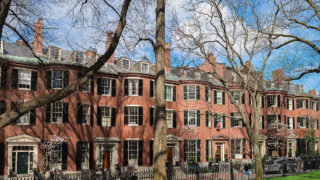
Louisburg Square was designed as a model for town house development in the 1840’s but the square was not replicated because of space restrictions. Today, the area is one of the most prestigious addresses in Boston. The homeowners, not the city, own the square and the oval park. Statues of Columbus and Aristides can be seen on the north and south ends, donated by a Greek merchant in 1850. Residents in the square have included author and critic William Dean Howells, the Alcotts, including author Louisa May Alcott, and currently Secretary of State, John Kerry.
11 Stop 11 $
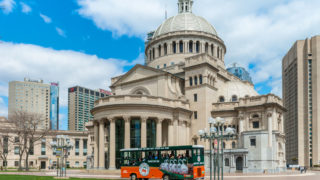
The Christian Science Plaza is the location of the First Church of Christ, Scientist, one of the largest churches in New England. The plaza consists of 14 spacious and serene acres, paved in brick and granite, with orderly rows of trees, buildings, stone benches, a large reflecting pool and a circular fountain. The Mother Church, built in 1894, consists of a Romanesque Church Edifice with a bell tower and stained glass windows, and the larger Church Extension, added in 1906, is a mix of Renaissance and Byzantine architecture.
11 Stop 11 $
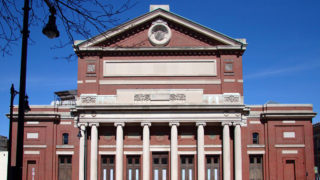
The Symphony Hall in Boston, Massachusetts is considered one of the top concert halls in the world because of its impressive acoustics. The Boston Symphony Orchestra and the Boston Pops share the hall. The Symphony Hall was designed through a collaboration of architects McKim, Mead and White and assistant professor of physics at Harvard University, Wallace Clement Sabine. Sixteen Greek and Roman statue replicas line the walls of the hall and Beethoven’s name is inscribed over the stage. The Symphony Hall’s organ, a 4,800 pipe Aeolian-Skinner, is also considered to be one of the best in the world. It was installed in 1949 and is autographed by Albert Schweitzer.
11 Stop 11 $
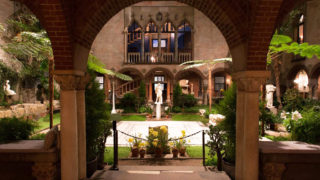
Isabella Stewart Gardner, a patron of the arts, established the museum in 1903 when her own property on Beacon Hill became too small for her growing collection. The Isabella Stewart Gardner Museum was designed as a replica of the 15th century Venetian style palazzo. Because Gardner disliked the cold, impersonal experience that museums usually offer, she chose the palazzo-style, a design which provides natural light and garden views. The museum, a must-see Boston attraction, features three floors of galleries surrounding a garden courtyard. The collection includes paintings, sculpture, tapestries, furniture, and decorative arts spanning 300 years, from locations around the world.
2 Stop 2 $
The gravestones in Copp’s Hill Burying Ground, Boston’s second oldest burying ground, tell the story of the population of the North End in colonial times. Originally known as Windmill Hill, the hill took the name of William Copp, a shoemaker who donated the land for a burying ground in 1659. It is the place of rest for thousands of artisans, craftspeople, and merchants. Some of the well known individuals are Increase and Cotton Mather, of the family of ministers, Robert Newman, sexton of the Old North Church at the time of Paul Revere’s ride, Edmund Hart, shipyard owner and builder of the USS Constitution, and Shem Drowne, the artist who made the weathervane for Faneuil Hall, among others.
Copp’s Hill Burying Ground - More Info
1 Stop 1 $
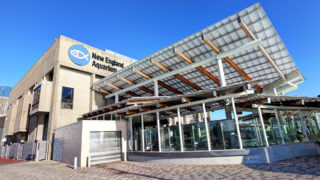
The New England Aquarium, situated on the scenic Central Wharf, has more than a dozen exhibits that highlight hundreds of different species from around the world. Attracting 1.3 million visitors each year, the Boston Waterfront attraction recreates natural habitats ranging from reefs and tide pools to rocky shorelines. In addition to its exhibits, the aquarium offers Whale Watch excursions that take visitors 30 miles east of Boston to Stellwagen Bank where you can see whales, dolphins, sea birds and other marine life. The aquarium also has an IMAX® Theater that features films of animals and their habitats, 3-D movies and first-run feature
New England Aquarium - More Info