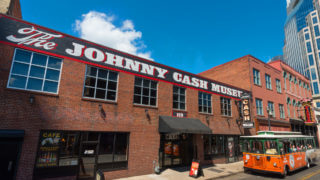
Headquartered on Music Square East, Curb Records is an independent music label founded by Mike Curb in 1964. The label’s top recordings include hits by legendary artists like the Righteous Brothers, Roy Orbison and Tim McGraw as well as Gloria Gaynor, the Judds and LeAnn Rimes. A philanthropist, Curb has been instrumental in restoring historic buildings, including Columbia’s Historic Quonset Hut, a recording studio originally established by Owen Bradley, and the Johnny Cash Museum. Curb is honored with a star on the Music City Walk of Fame. The company operates a retail shop that offers a wide selection of vinyl records, DVDs and specialty merchandise.
Situated southwest of downtown, Music Row is home to several businesses and attractions related to the city’s musical heritage. Considered the heart of Nashville’s entertainment industry, the Music Row area is centered on 16th and 17th Avenues South, which are known as Music Square East and West respectively. Points of interest in the district include the historic RCA Studio B, Columbia’s Historic Quonset Hut, the first recording studio on Music Row, and Owen Bradley Park as well as numerous shops and upscale eateries. “Musica,” a large bronze statue designed by Alan LeQuire, is the centerpiece of the Music Row Roundabout.
Music Row - More Info
12 Stop 12
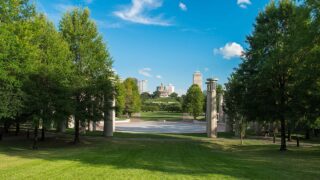
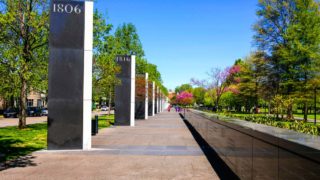
The 1,400-foot-long Pathway of History is an engraved wall featuring important historical events that played an integral role in the culture and heritage of the Volunteer State from 1776-1996. Granite pylons, representing each decade, serve as stone tablets. There’s a symbolic break in the wall during the Civil War period to denote how the state was divided during that period. The pathway also includes a World War II Memorial with its floating 9-ton granite globe, a memorial to the Civilian Conservation Corps and the Walkway of Counties that includes time capsules from every county.
9 Stop 9
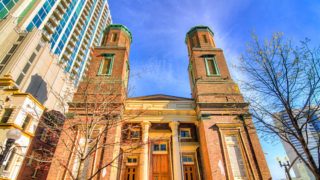
A National Historic Landmark, the Downtown Presbyterian Church was built in 1851. State Capitol architect William Strickland designed the building, which is one of the country’s largest and best-preserved examples of Egyptian Revival style architecture. Serving as a Union military hospital during the Civil War, the church was renovated in the 1880s. The interior, painted to resemble an Egyptian temple, features walnut benches and vivid motifs like winged globes representing the Egyptian sun god Amun-Ra, which signifies eternity. The 4,000-pound church bell, donated by Adelicia Acklen, served as the city fire alarm for more than two decades.