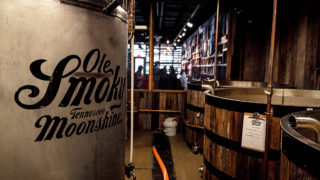
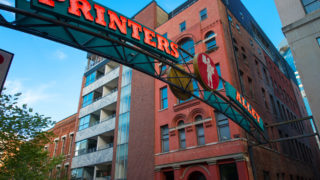
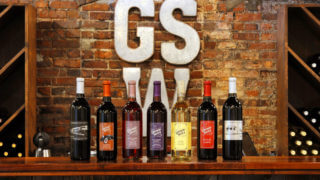
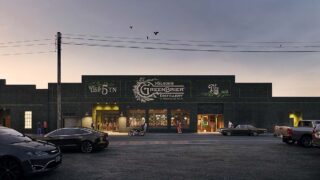
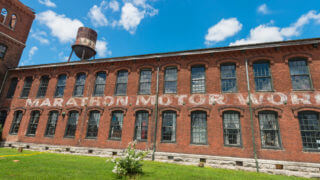
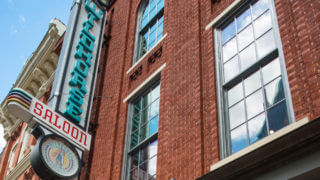
6th & Peabody, the leading craft distiller of moonshine and home of the world’s most visited distillery, has expanded their presence in Tennessee by joining forces with Yee Haw Brewing Company, one of Tennessee’s top craft breweries.
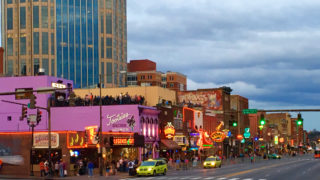
When in Nashville, visit the famous 6th & Peabody and enjoy the distillery, brewery, bars, and more. Visitors are able to enjoy moonshine, cocktails, & beer.
6th & Peabody - More Info
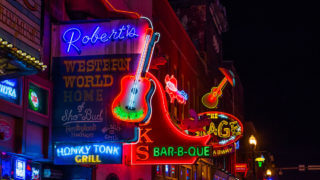
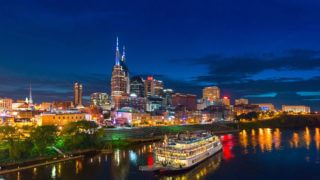
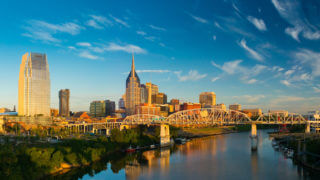
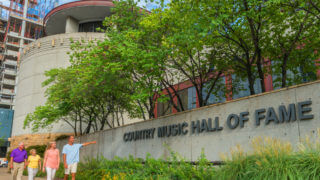
Welcome to Tennessee’s capital, Music City! This southern city is filled with all sorts of sensational sounds, tourist trinkets, southern comforts and the hustle of the honky tonks. Listen and the city calls to you. You’ll find your ears leading the way as you wander towards the melodious sounds. Known for all things country, Nashville excites, invites and entices newcomers and returning veterans alike. Whether you’re digging your taste buds into your newfound love of fried green tomatoes, chowing down at festive barbecue joints or hanging with the legends at the Country Music Hall of Fame, Nashville is bound to convince you to return.
Nashville for First Timers - More Info
Known as Music City, Nashville has a lot to offer musical aficionados. From honky tonks, Country Music Hall of Fame, to musical night tours. If you are in the city and are interested in learning and experiencing more about the state of Tennessee and the distinctive American art form of country music, a day trip from Nashville to Memphis, TN is a perfect way to get acquainted. Keep reading for different ways to get there and where to stop along the way as well as what to see and do in Nashville.
The best ways to make the trek from Memphis to Nashville are by taking a bus or driving a car, which is the fastest and least expensive way to travel. Interstate 40 eastbound is the thoroughfare connecting the cities. A car trip will take approximately three hours each way.
Day Trips to Nashville from Memphis, TN - More Info
$
Established in 1990, the 200-acre zoological park features over 2,200 animals from more than 350 different species from around the world. Guests can view amphibians, birds and mammals as well as fish and reptiles, such as the blue poison arrow frog, colorful lorikeets and ring-tailed lemurs. You can also see South American piranhas and dwarf caiman crocodile. Many exhibits replicate the inhabitants’ native environments, giving you the opportunity to see the animals interact in their natural elements. The Jungle Gym is a children’s playground that includes slides, cargo nets, swings and other play structures. The Nashville Zoo is also the setting for the historic Grassmere Farm and its 19th-century plantation house, which is a public museum.
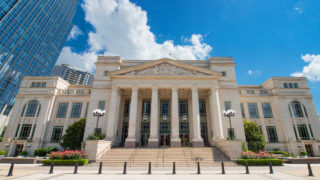
Hosting the renowned Nashville Symphony Orchestra, the Schermerhorn Symphony Center is a prominent example of 21st century Neoclassical architecture, which was designed by David M. Schwarz of Washington, D.C. Completed in 2006, the performing arts venue has excellent acoustics and is one of the few concert halls in the country featuring natural light. The 30,000-square-foot, shoebox-style concert venue is decorated with irises, the Tennessee state flower, as well as horseshoes and coffee beans to honor patrons Laura Turner and the Cheek family. The Center also houses the Mike Curb Family Music Education Hall and a colonnade-enclosed public garden.
$
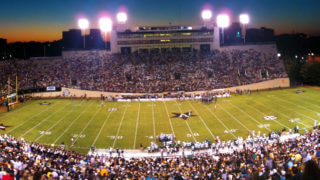
Situated on the campus of Vanderbilt University, the stadium was originally built in 1922 as the first athletic venue in the South to be constructed solely for hosting collegiate football. Home to the Vanderbilt Commodores, the stadium accommodates approximately 40,550 fans. It is the smallest football venue in the Southeastern Conference. In addition to a high-definition video scoreboard, Vanderbilt Stadium features a grassy berm at the north end where fans can spread their blankets and enjoy a picnic while watching the game. The university Navy ROTC detachment blasts the “Admiral,” a foghorn, when the Commodores take the field, score points and win home games.
6 Stop 6
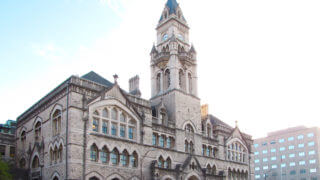
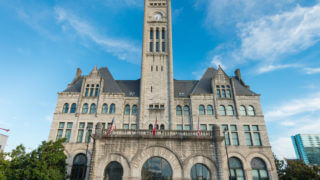
The Art Deco-style Frist Art Museum displays works by local, state and regional artists along with national and international exhibits. The center is housed in the former post office that was completed in 1934 as part of the Public Works Administration. Architectural details, including fluted pilasters and stone eagles, blend classical elements with national symbols to create a style known as Grecian Moderne. Listed on the National Register, the marble building was repurposed as the Frist Art Museum in 2001. Encompassing 24,000 square feet of gallery space, the non-collecting museum exhibits traveling collections from around the world.
Located in the Gulch, Two Old Hippies is a retail store offering a selection of guitars, music, clothing and other novelty merchandise in an atmosphere of peace, love and understanding. The 8,000-square-foot shop features a stage outfitted with an organ, several guitars and a drum set as well as lighting and a mixing board. “The Vault” is a room where customers can try out various guitars in a quiet space. In the center of the store is a converted VW “Magic Bus.” The walls of the store are lined with an extensive collection of artifacts and memorabilia.
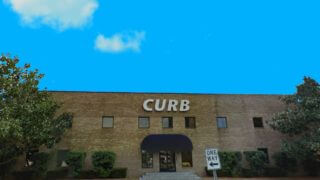
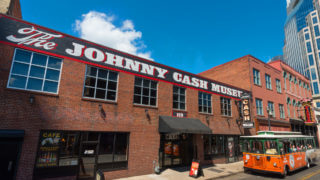
Headquartered on Music Square East, Curb Records is an independent music label founded by Mike Curb in 1964. The label’s top recordings include hits by legendary artists like the Righteous Brothers, Roy Orbison and Tim McGraw as well as Gloria Gaynor, the Judds and LeAnn Rimes. A philanthropist, Curb has been instrumental in restoring historic buildings, including Columbia’s Historic Quonset Hut, a recording studio originally established by Owen Bradley, and the Johnny Cash Museum. Curb is honored with a star on the Music City Walk of Fame. The company operates a retail shop that offers a wide selection of vinyl records, DVDs and specialty merchandise.
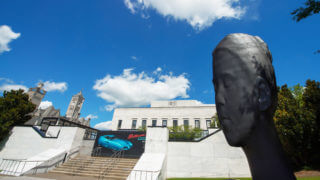
Situated southwest of downtown, Music Row is home to several businesses and attractions related to the city’s musical heritage. Considered the heart of Nashville’s entertainment industry, the Music Row area is centered on 16th and 17th Avenues South, which are known as Music Square East and West respectively. Points of interest in the district include the historic RCA Studio B, Columbia’s Historic Quonset Hut, the first recording studio on Music Row, and Owen Bradley Park as well as numerous shops and upscale eateries. “Musica,” a large bronze statue designed by Alan LeQuire, is the centerpiece of the Music Row Roundabout.
Music Row - More Info
4 Stop 4
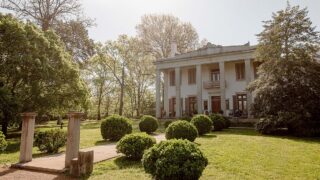
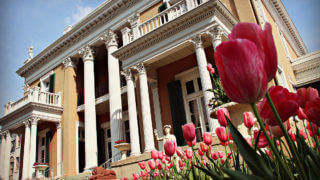
Located on the campus of Belmont University, this historic Italian villa-style mansion was constructed between 1850-1860 by Adelicia and Joseph Acklen. Through the years, it has served as the Acklens’ summer home, as a headquarters of the Union Army during the Battle of Nashville in 1864, and as a women’s college. Placed on the National Register of Historic Places in 1971, Belmont Mansion was the largest home built in Nashville prior to the Civil War. The ornate home features a collection of original furnishings, paintings, and statuary as well as elaborately landscaped gardens.
Belmont Mansion - More Info
12 Stop 12
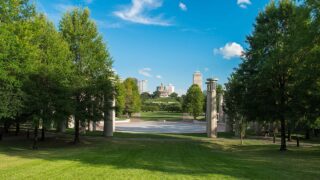
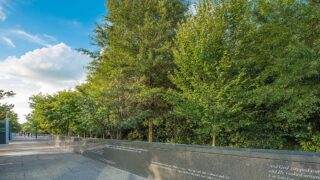
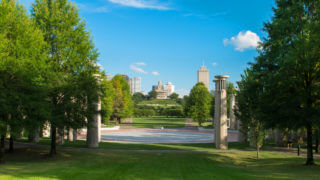
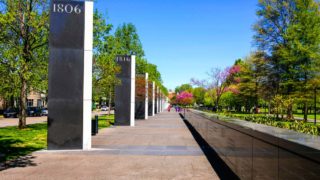
The 1,400-foot-long Pathway of History is an engraved wall featuring important historical events that played an integral role in the culture and heritage of the Volunteer State from 1776-1996. Granite pylons, representing each decade, serve as stone tablets. There’s a symbolic break in the wall during the Civil War period to denote how the state was divided during that period. The pathway also includes a World War II Memorial with its floating 9-ton granite globe, a memorial to the Civilian Conservation Corps and the Walkway of Counties that includes time capsules from every county.
12 Stop 12 $
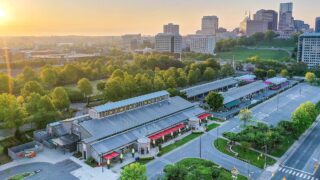
Tracing its roots back to the 1800s, the Farmers’ Market stretches from Jackson Street to Harrison Street along Rosa Parks Boulevard adjacent to the Bicentennial State Park Mall. Covering 16 acres, the market hosts farmers with local produce, artisans, and merchants, as well as restaurants and seasonal festivals. The covered, outdoor farm sheds are dedicated to fresh produce, handmade and local goods while the Market House is home to a variety of restaurants and retail shops. Open year-round, the market is busiest during the April – November growing season.
Farmers’ Market - More Info
11 Stop 11 $
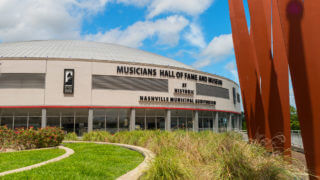
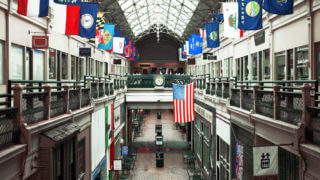
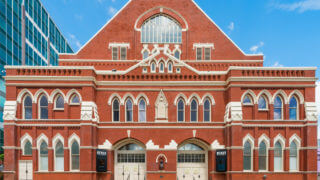
The Musicians Hall of Fame at Historic Nashville Auditorium honors the artists and session musicians who have accompanied legendary performers in a broad range of musical genres, including country, rock, jazz and soul. Honorees include groups like the A-Team, Booker T and the MGs, the Memphis Boys and Toto. These versatile performers provided background music during recording sessions for numerous hit records. The museum’s galleries and artifacts commemorate these talented musicians along with the unique sounds emanating from cities like Nashville, Detroit, Muscle Shoals, Memphis and Los Angeles.
Musicians Hall of Fame and Museum - More Info
9 Stop 9
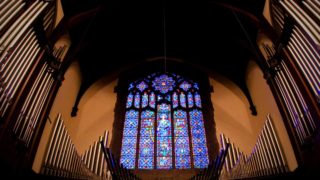
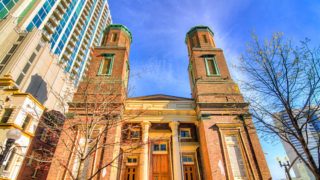
A National Historic Landmark, the Downtown Presbyterian Church was built in 1851. State Capitol architect William Strickland designed the building, which is one of the country’s largest and best-preserved examples of Egyptian Revival style architecture. Serving as a Union military hospital during the Civil War, the church was renovated in the 1880s. The interior, painted to resemble an Egyptian temple, features walnut benches and vivid motifs like winged globes representing the Egyptian sun god Amun-Ra, which signifies eternity. The 4,000-pound church bell, donated by Adelicia Acklen, served as the city fire alarm for more than two decades.
7 Stop 7 $
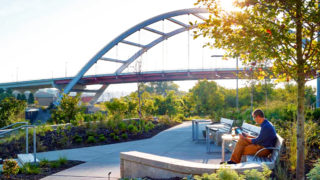
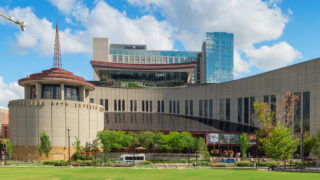
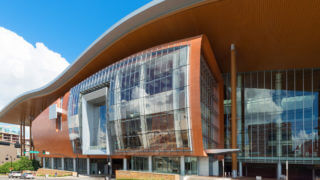
Encompassing 1.2 million square feet, Music City Center is Nashville’s downtown convention and exhibition complex. The work of Tvsdesign, the facility is adjacent to the Country Music Hall of Fame and the Bridgestone Arena. Along with stunning skyline views of downtown, the complex features a variety of flexible event spaces, including a 350,000-square-foot exhibition hall, 90,000-square-feet of meeting rooms and a 57,000-square-foot grand ballroom. The structure incorporates numerous eco-friendly designs, such as a four-acre green roof and a rainwater collection tank that is used to irrigate the building’s landscaping. Inside are several works by local area artisans.
Music City Center - More Info
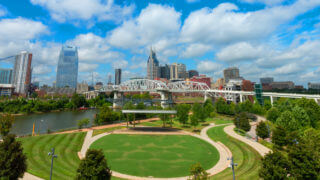
Situated on the bank of the Cumberland River, West Riverfront Park features over a mile of scenic multi-use trails, a 13,400-square-foot dog park and ornamental gardens. The sports facilities include basketball courts and adult-friendly swings. Guests also enjoy The Green, a 1.5-acre event lawn, and live performances in the Ascend Amphitheater. In addition to hosting a summer concert series, West Riverfront Park is the setting for various annual festivals, including Music City’s Independence Day celebration and fireworks display.