
San Diego Día de los Muertos Guide
Día de los Muertos, or Day of the Dead, is a Mexican holiday rooted in remembrance and community. Families gather to honor loved ones who have passed by creating colorful altars, preparing favorite foods and filling plazas with flowers, candles and music. The celebration is about memory and connection, and it continues to thrive because of the way it brings people together.
In San Diego, where ties to Mexico are part of the city’s foundation, the holiday carries deep cultural importance. Old Town San Diego becomes the heart of San Diego Día de los Muertos, and the entire neighborhood transforms into a space where the living honor the departed with joy, reflection and pride. The atmosphere is welcoming, and many visitors describe it as one of the most meaningful cultural events they have ever attended.
-
 Admissions
 -
Shopping
-
Dining
-
Entertainment
-
Restrooms
 Admissions
  Shopping
  Dining
  Entertainment
  Restrooms
 How Did Día de los Muertos Begin?
Día de los Muertos grew out of ancient Aztec rituals that honored the dead and later blended with Catholic traditions brought during Spanish colonization. Over time, the holiday became a way to celebrate the cycle of life, recognizing death not as an end but as part of a larger journey. Families build ofrendas, or altars, with photos, candles, marigolds, food and keepsakes. Each altar becomes a story in itself, reflecting the personality, joys and memories of someone who has passed.
The practice is deeply personal, but it also thrives in shared spaces. Communities gather to create public displays that bring neighbors and visitors together in the same spirit of remembrance. San Diego Día de los Muertos follows this tradition, turning Old Town into a setting where personal memory blends with public expression. Every altar, candle and performance carries meaning, making the event a living tradition that continues to grow each year.
What Are the Key Symbols of San Diego Día de los Muertos?
San Diego Día de los Muertos is filled with symbols that carry history and meaning. The most central are the ofrendas, or altars, which stand as focal points of the celebration. As mentioned above, families decorate them with photos, favorite foods, candles and personal belongings, creating spaces that feel both sacred and familiar. These altars invite loved ones back in spirit while sharing their stories with the community in a way that is both moving and inclusive.
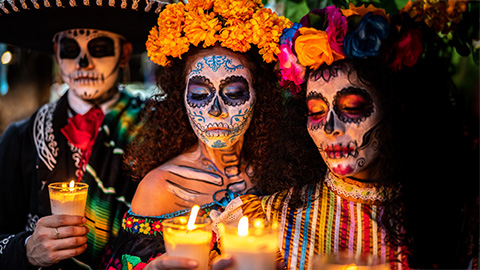
Marigolds, known as cempasúchil, line pathways and frame altars in brilliant orange. Their color and scent are believed to guide spirits home, and their presence has become one of the holiday’s most recognizable traditions. Calaveras, or skulls, appear in many forms, from sugar skulls with playful designs to face painting that blends art with remembrance. These symbols encourage participants to reflect on life with joy while also remembering those who shaped their families and communities.
Food also holds meaning, with pan de muerto serving as a staple across the event. This sweet bread, often decorated with shapes that symbolize bones, is shared among families and sold by local vendors. Alongside it, visitors may see seasonal drinks, handmade candies or traditional dishes that round out the celebration. Each of these elements ties today’s gathering to generations of cultural history, ensuring that San Diego Día de los Muertos feels rooted, authentic and welcoming to all.
How Does Art Shape San Diego Día de los Muertos?
Art is central to San Diego Día de los Muertos. Throughout Old Town, papel picado banners stretch across courtyards, their intricate cut-out patterns moving gently in the breeze. Local artists display hand-painted ceramics, wooden carvings and jewelry that carry symbols of the holiday. The Grand Ofrendas Exhibition often includes original artwork created for specific families or community members. Visitors are encouraged to explore the artisan marketplace, where every piece reflects both cultural tradition and personal creativity. Adding art to the celebration helps keep the holiday alive, making it accessible and meaningful for new generations while supporting San Diego’s creative community.
What Role Does Music and Dance Play in the Celebration?
Music and dance set the rhythm for San Diego Día de los Muertos. Mariachi groups perform in plazas, their trumpets and violins weaving together songs that have long been part of Mexican heritage. Folkloric dancers in colorful dresses move to the beat of traditional music, their steps echoing the patterns of ceremonies that date back centuries. These performances are not just entertainment but expressions of identity, pride and remembrance. By watching and listening, visitors share in a cultural tradition that brings joy as well as reflection. The energy of the music and movement fills Old Town, carrying the celebration from day into night and reminding everyone that honoring the past can be both heartfelt and full of life.
How Is San Diego Día de los Muertos Celebrated in Old Town?
Old Town San Diego State Historic Park serves as the main stage for the celebration. The historic buildings and plazas provide the backdrop, while the people and performances bring everything to life. The Grand Ofrendas Exhibition is one of the most visited features. Families, businesses and organizations set up altars throughout the park and nearby shops. Each altar reflects personal stories, community memories and cultural heritage. Walking among them is both moving and educational, offering a glimpse into the lives of those being honored.
Live performances fill the air with music and dance. Mariachi bands, folkloric dancers and cultural troupes share traditions through sound and movement. Processions take place in the evening, with participants carrying candles and wearing painted faces that resemble calaveras. The processions are steady and heartfelt, combining quiet reflection with public remembrance.
Food and art are everywhere during the event. Vendors and restaurants serve seasonal dishes such as tamales, tacos and pan de muerto. The artisan marketplace features papel picado, ceramics, jewelry and handmade crafts. These elements create a space where visitors can eat, shop and learn while supporting the local community.
Why Is Old Town the Heart of San Diego Día de los Muertos?
Old Town has been central to San Diego’s cultural history for centuries. Its adobe buildings, cobblestone paths and preserved courtyards carry the stories of the families who lived here long before the city became what it is today. Holding San Diego Día de los Muertos here connects the present to that history in a very real way.
The neighborhood’s museums and cultural spaces, such as the Old Town Market San Diego and heritage sites within the state historic park, are active participants in the event. During the celebration, they open their doors to exhibitions, altars and gatherings that combine tradition with community spirit. The setting gives the holiday an authenticity that reflects both its Mexican origins and its importance to the people of San Diego today.
How Can You Plan Your Visit to San Diego Día de los Muertos?
Planning ahead makes San Diego Día de los Muertos more enjoyable. Arriving earlier in the day gives you time to see the ofrendas and exhibitions before the evening processions draw larger crowds. Families with kids often prefer the daytime activities, while many visitors stay late into the night to hear live music, watch traditional dance and see candlelit altars glowing under the stars.
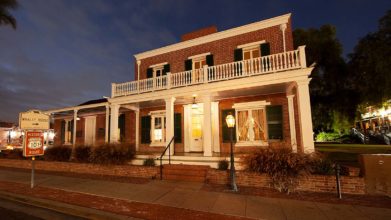
Comfort plays a big role in how much of the event you experience. Wearing light clothing and comfortable shoes makes walking the plazas easier, and having water on hand keeps the day stress-free. Breaks are easy to take, since Old Town is filled with courtyards, shaded benches and plenty of food options. Many guests add nearby attractions to their visit, with The Whaley HouseSM Museum standing out as a favorite for its mix of history, folklore and guided tours that make the past feel close.
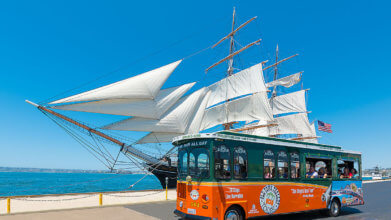
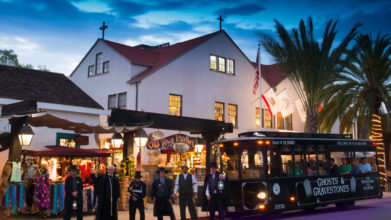
Old Town Trolley Tours® is also a reliable choice during the festival. The hop-on, hop-off route connects Old Town with other neighborhoods so you can combine the celebration with additional sightseeing. Along the way, the guides share live narration that ties San Diego’s landmarks to its history, making your travel time part of the experience and giving you more ways to enjoy the city while still staying close to the heart of the event.
Why Visit San Diego Día de los Muertos?
San Diego Día de los Muertos is more than an event. It’s a cultural tradition that welcomes everyone into the spirit of remembrance. The celebration creates a sense of community that feels both personal and shared. Visitors are invited not just to observe but to participate, whether by joining a procession, tasting seasonal food or supporting local artisans in the marketplace. Exploring the event also offers the chance to see how San Diego’s heritage and Mexican traditions connect in daily life, giving the festival a depth that stays with you long after it ends.
Those who want to expand their trip beyond Old Town can continue exploring the city with Old Town Trolley Tours. The narrated rides add context to San Diego’s neighborhoods, making it easy to balance the festival with other sights and attractions. Attending San Diego Día de los Muertos gives you a lasting impression of both the holiday’s meaning and the culture that keeps it alive today, making it one of the city’s most meaningful traditions.
FAQs
What is the difference between Halloween and Día de los Muertos?
Halloween focuses on costumes, candy and playful scares, while Día de los Muertos is centered on remembrance and honoring family. During San Diego Día de los Muertos, the celebration brings together altars, music, food and gatherings that highlight the lives of loved ones who have passed. Visitors see a mix of tradition, culture and community, and the atmosphere in Old Town feels welcoming and uplifting. The holiday is about joy, storytelling and memory, creating a unique experience that brings people closer to Mexican heritage.
Is the event free to attend?
Many of the activities during San Diego Día de los Muertos in Old Town are free. Walking through the plazas, viewing the altars and enjoying cultural performances do not require payment. Food, drinks and hands-on experiences may have a cost, yet visitors can easily enjoy the festival without spending much. Families often bring children to watch folkloric dancing or create art projects that are open to the public. For those who want to explore more of the city during their visit, Old Town Trolley Tours is a paid option that connects the festival with other San Diego landmarks.
What is an ofrenda?
An ofrenda is a personal altar that welcomes the spirits of loved ones. At San Diego Día de los Muertos, these altars are decorated with candles, marigolds, photos and favorite foods of the deceased. Some honor entire families or important community members, and each one is filled with meaningful details. Seeing them in person shows how the holiday blends artistry with deep respect for tradition. Every altar feels unique, and visitors often spend time admiring the care and creativity that go into each display.
What are the key dates for the celebration?
The main days of San Diego Día de los Muertos are November 1 and November 2. Events often extend to the weekend before or after, allowing more visitors to take part. Old Town San Diego State Historic Park regularly posts updates with schedules for performances, art workshops and cultural activities. Families who attend usually spend the afternoon exploring the park before continuing their evening in the city. Old Town Trolley Tours makes it easy to move from the festival to other parts of San Diego without needing to drive or park.
Is San Diego Día de los Muertos worth visiting?
Yes, attending San Diego Día de los Muertos offers an experience filled with culture, history and community. Visitors are able to see altars, performances and traditions that highlight the region’s strong connection to Mexican heritage. Old Town Trolley Tours adds even more to the day, giving guests a way to explore the rest of the city with live narration from friendly guides. The event leaves many with lasting memories of color, music and celebration, and it stands out as one of the most meaningful annual gatherings in San Diego.